 FGU
FGU

 College and Department of Buddhist Studies, FGU


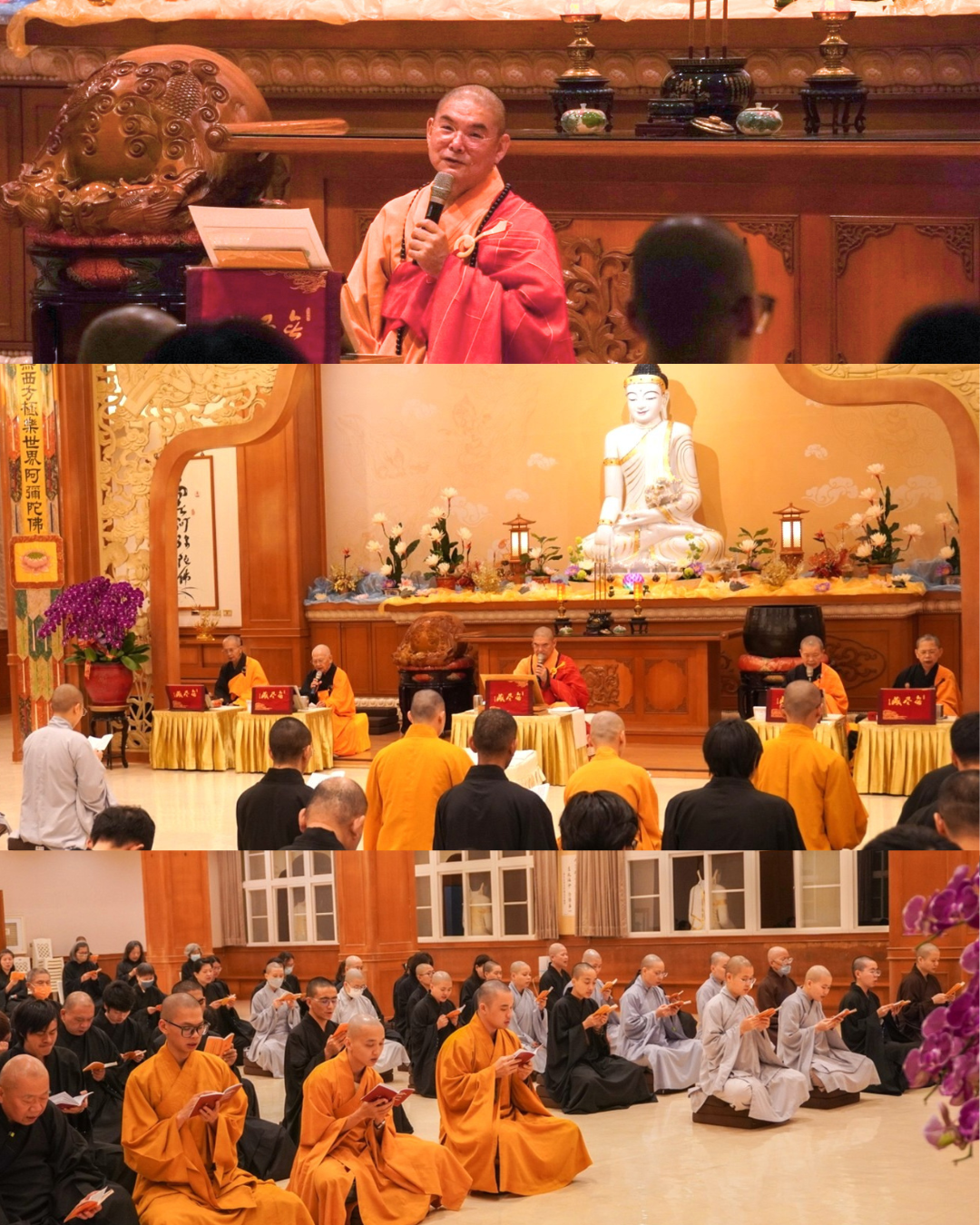
the Department of Buddhist Studies at Fo Guang University organized its Practice-in-Action Experience Program, in which 67 students returned to Fo Guang Shan’s Jingye Forest for a seven-day Amitābha Buddha recitation retreat (Fo Qi).
On the evening of January 19, the service was led by Venerable Huifa from the Fo Guang Shan Buddha Museum.
Historical Background: The Dual Cultivation of Chan and Pure Land
Venerable Huifa explained that toward the late Tang dynasty, due to warfare and social upheaval, many scriptures and treatises were lost. Schools that relied primarily on doctrinal and theoretical exposition found it increasingly difficult to spread the Dharma. In contrast, traditions centered on mind-to-mind transmission in Chan (Zen) and Buddha-recitation in the Pure Land tradition remained vibrant among the people.
In fact, the practice of dual cultivation of Chan and Pure Land dates back even earlier. During the Wei, Jin, and Six Dynasties periods, figures such as Huiyuan of Mount Lu in the Eastern Jin dynasty combined meditative practice with Buddha-recitation samādhi, and was said to have witnessed auspicious visions of the Pure Land three times.
Fo Guang Shan’s Tradition of Chan–Pure Land Practice
At Fo Guang Shan, the seven-day retreat follows this same tradition of dual cultivation. During breaks in recitation, the presiding monastic offers Dharma talks. This custom has deep historical roots.
Huiyuan himself would ascend the Dharma seat while leading recitation retreats, sharing stories and parables to keep practitioners alert and dispel fatigue. This method improved upon earlier communal rituals that merely “chanted the Buddha’s name and bowed according to the text,” which often led to tiredness and difficulty sustaining practice.
Personal Stories and Living Faith
Venerable Huifa shared that since the second grade of elementary school, he had accompanied his mother to Shoushan Temple to participate in Fo Qi retreats in celebration of Amitābha Buddha’s birthday. Though too young at the time to understand the practice, he remembered the compassion of the monastics—allowing participants to walk when their legs grew numb from sitting, to sit when tired, and to rest quietly with the lights off when weary from chanting.
He also recounted a traditional story about Yanshou of the Five Dynasties period, a Chan master later revered as a Pure Land patriarch. According to legend, after his passing he was recognized as an incarnation of Amitābha Buddha, and his birthday subsequently became commemorated as Amitābha’s sacred day.
Drawing on his own experience, Venerable Huifa encouraged everyone to maintain a heartfelt connection with the Buddha, trusting that sincere practice brings spiritual response.
Before the Buddha Museum was completed, he was responsible for watering the gardens. During one Amitābha birthday retreat, he was assigned to attend Fo Qi at another temple and worried about the plants, so he prayed earnestly to the Buddha for help. Although Kaohsiung had experienced a long drought, it unexpectedly rained throughout the retreat. Remarkably, this occurred again for ten consecutive years. Hearing this, many students felt their faith in the Buddha deepen.
Participant Reflection
A visiting monastic from another temple shared:
“It was my first time attending a Fo Guang Shan Fo Qi. When the monastics began chanting, their voices seemed deeply absorbed in samādhi. It inspired great reverence in me, and I naturally followed along, chanting the Buddha’s name with renewed vigor.”