 FGU
FGU

 College and Department of Buddhist Studies, FGU
Why study Buddhism at FGU?
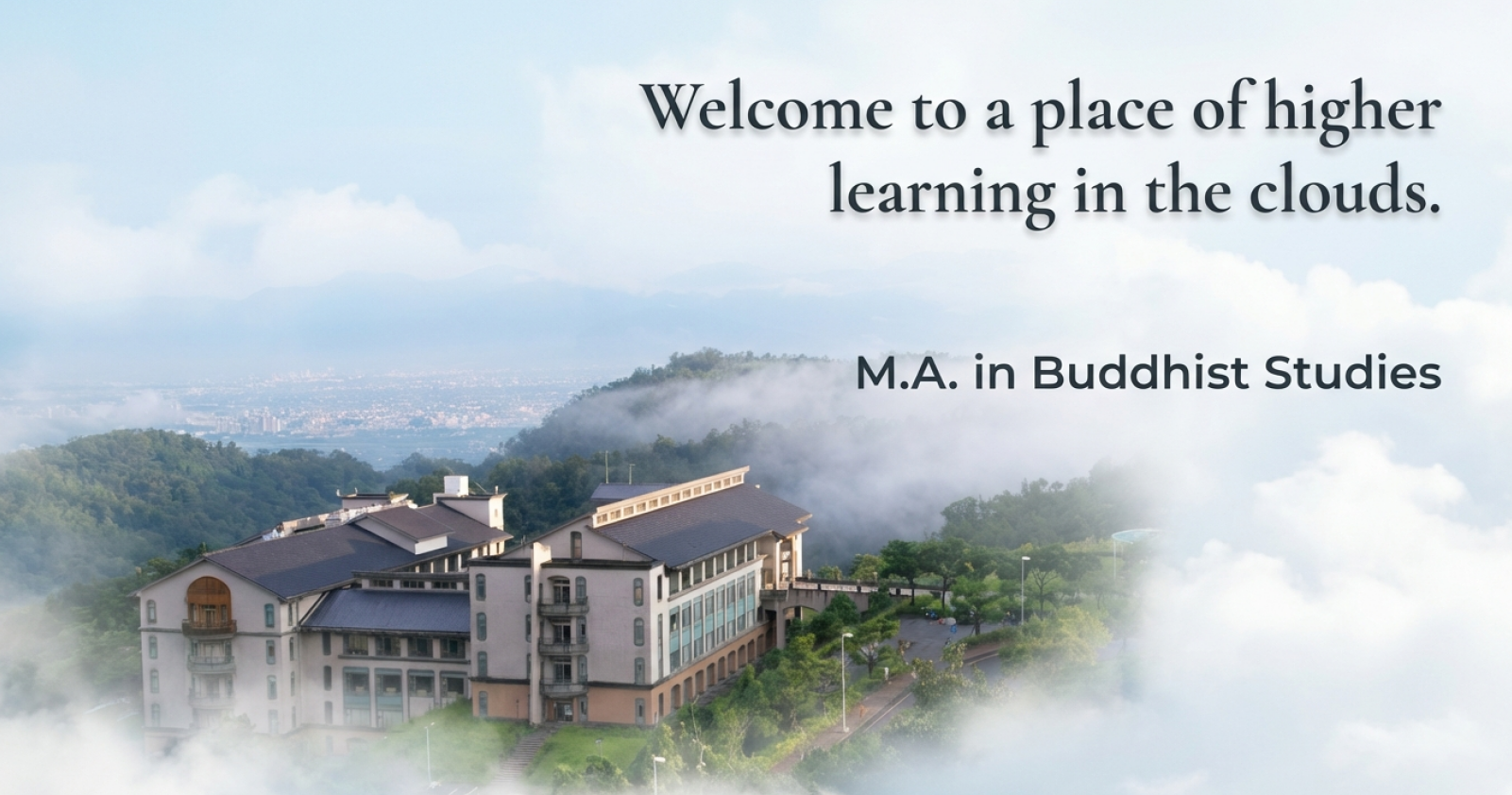
1. What is the M.A. English-track program at Fo Guang University’s Department of Buddhist Studies?
Answer:
It’s a Master of Arts in Buddhist Studies taught entirely in English, focusing on Chinese Mahayana Buddhism, interdisciplinary and global perspectives, and combining traditional Buddhist scholarship with modern academic methods.
2. Who can apply to this English-track M.A. program?
Answer:
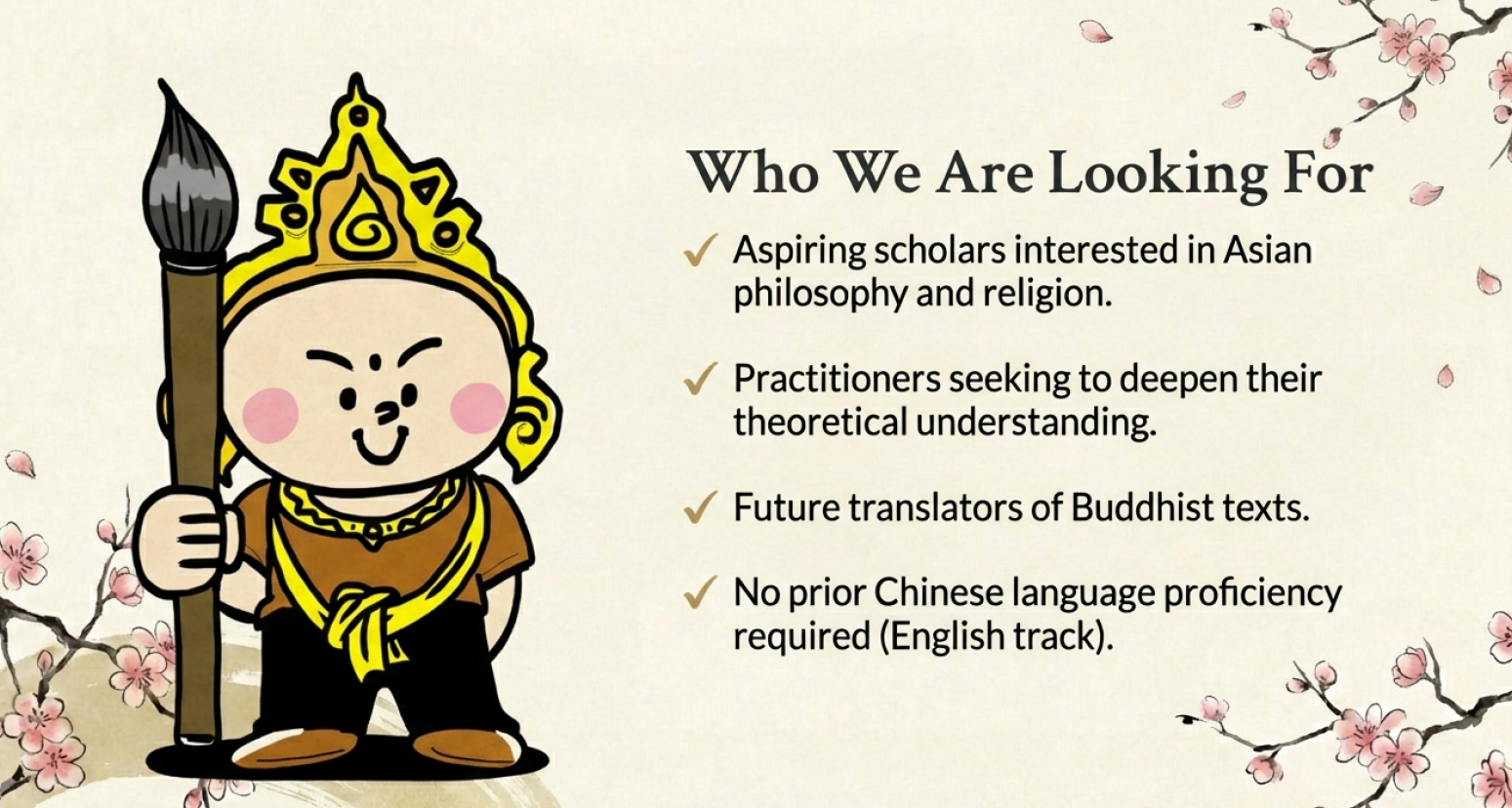
International students as well as domestic and overseas Chinese applicants can apply, provided they meet the general graduate admission requirements of FGU and the English proficiency expectations. (The specific admissions requirements and procedures can be found on the FGU admissions page.)
3. What are the language requirements for admission?
Answer:
-
English proficiency is required (e.g., CEFR B1 level or equivalent).
-
Students without prior study in classical Buddhist languages (Sanskrit, Tibetan, or Classical Chinese) will take foundational language courses.
-
Non-native Chinese speakers can take Buddhist Chinese I & II as foundational courses.
4. How many credits are required for graduation?
Answer:
Students must complete at least 24 credits of coursework (this excludes the 6 credits for the thesis).
5. What kinds of courses are included in the curriculum?
Answer:
Coursework includes:
-
Required courses (academic writing, Buddhist texts & tradition, Buddhist practice, English-Chinese Buddhist terminology)
-
Elective courses across areas such as Buddhist philosophy, history, ethics, translation, and fieldwork methods.
A full list is detailed in the curriculum PDF.
6. Do I have to write a thesis?
Answer:
Yes, the program includes a Master’s thesis worth 6 credits, which must be completed to graduate.
7. Are there scholarships available for M.A. students?
Answer:
Yes — all enrolled students, including international students, are eligible to apply for the DBS Scholarship (Buddhist Studies Elite Scholarship), which provides NT$50,000 per semester for qualified students.
8. What are the requirements to receive the DBS Scholarship?
Answer:
To be eligible, students must participate in the department’s communal living and shared meals program, maintain passing grades, and engage with the department’s experiential learning environment.
9. What unique learning experiences does the M.A. program offer?
Answer:
Beyond academia, students benefit from:
-
Immersive cultural experiences in Buddhist communities,
-
Practice courses through the Yunshui Residential College, and
-
Opportunities for personal growth alongside scholarly study.
10. Is the English-track program fully taught in English?
Answer:
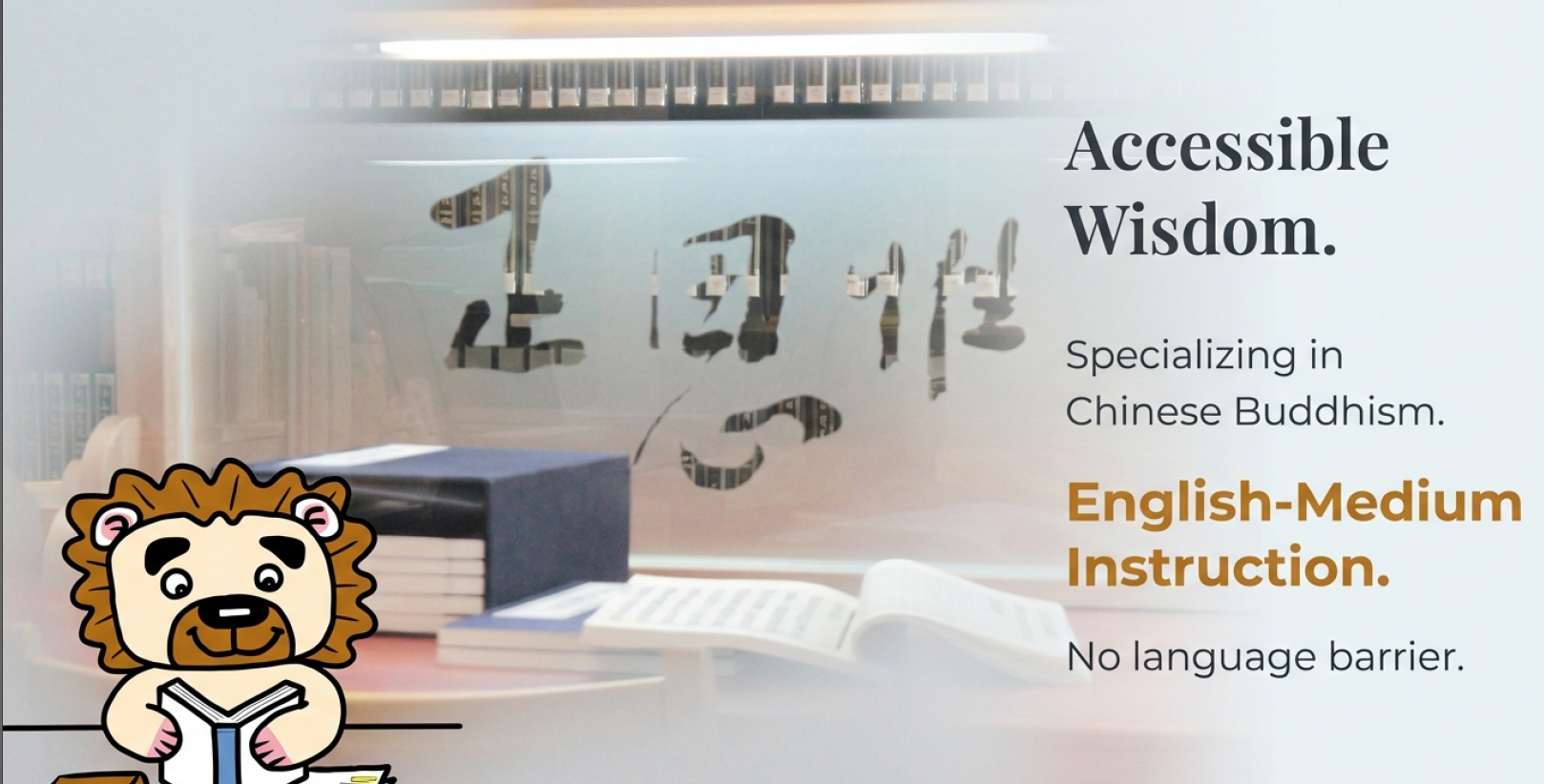
Yes. The M.A. English-track offers 100% English-medium instruction, including lectures, seminars, academic writing training, and thesis supervision. It is designed especially for international students and students seeking global academic or professional careers, while still providing opportunities to learn Buddhist Chinese or classical languages when needed.
11. Do students only study theory, or are there practical/experiential components?
Answer:
The program emphasizes both academic study (解) and practice (行). Besides coursework in Buddhist texts, philosophy, and history, students may participate in communal living, meditation, service learning, and retreat-style practice courses, integrating Buddhist learning into daily life. This “learning-by-living” model is a distinctive feature of the department.
12. Are there opportunities for international exchange or overseas learning?
Answer:
Definitely. The department maintains international partnerships and overseas learning opportunities, including exchange programs, short-term study trips, field research, and visits to global Buddhist communities and Fo Guang Shan branch temples. Students have studied or conducted exchanges in countries such as India, Germany, Japan, Singapore, and beyond, cultivating strong cross-cultural competence.
Students' Stories (click the images)