
 Facebook
 Instragram
 College and Department of Buddhist Studies, FGU
Addressing the broader question of AI’s role in Buddhist translation, Venerable Zhiyue posed a critical issue: Will human translators still be needed in the future? He explained that while approximately 150 people currently participate in the Fo Guang Dictionary translation project, only about 15 core members are responsible for final review and decision-making. As AI technology continues to advance, the importance of mid-level translators may gradually decline, and the primary human role will shift from translation to expert review and verification.
Using the Jingde Record of the Transmission of the Lamp as an example, Venerable Zhiyue demonstrated that although different AI systems each have their strengths and weaknesses, they all exhibit varying degrees of uncertainty—particularly in contextual interpretation, the handling of proper names, and doctrinal accuracy—thereby underscoring the indispensable role of expert human reviewers.
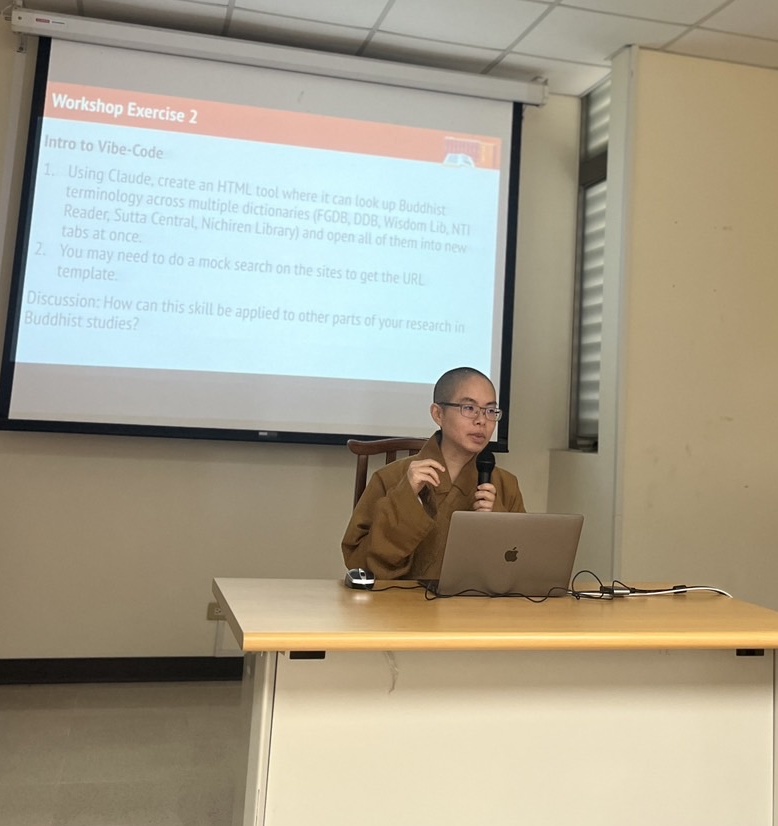
The workshop also introduced the emerging concept of “vibe-coding.” In the past, digital translation tools required users to learn programming languages. Today, however, users can guide AI systems through natural language interaction alone. Vibe-coding refers to the ability to accomplish complex tasks by communicating effectively with AI, without writing code, by clearly articulating intentions and instructions.
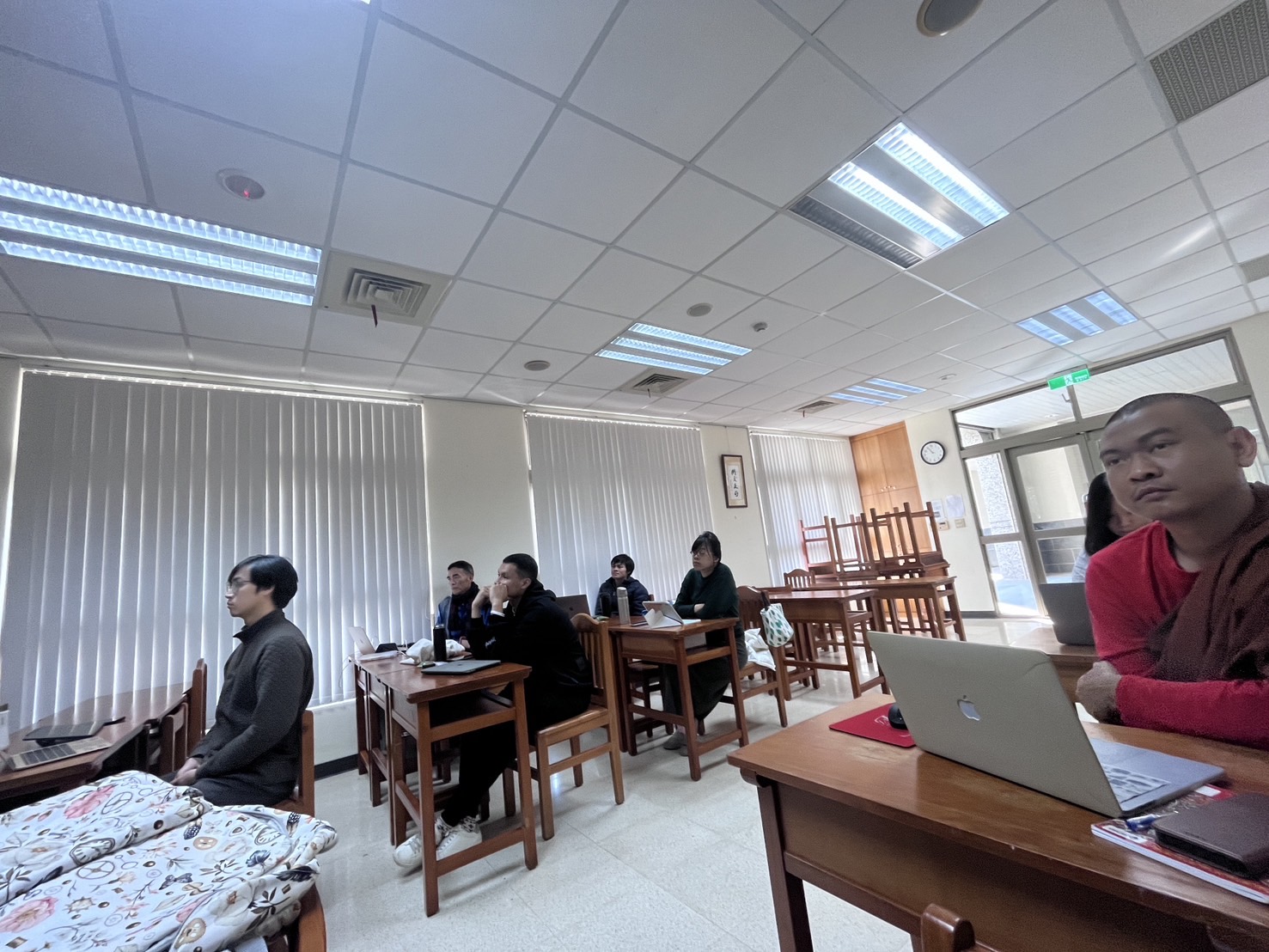
In conclusion, Venerable Zhiyue emphasized that AI will not fully replace humans. The main challenge lies not in translation ability itself, but in the human capacity to communicate effectively with AI. In the latter part of the workshop, participants engaged in hands-on vibe-coding exercises and practiced using AI tools to translate Buddhist texts, gaining first-hand experience of how AI can be integrated with humanistic and scholarly expertise.
By combining theoretical discussion, comparative analysis, and practical training, this workshop highlighted new possibilities for AI-assisted Buddhist studies and scripture translation, while opening forward-looking perspectives for interdisciplinary collaboration in digital humanities and Buddhist scholarship.