 FGU
FGU

 College and Department of Buddhist Studies, FGU
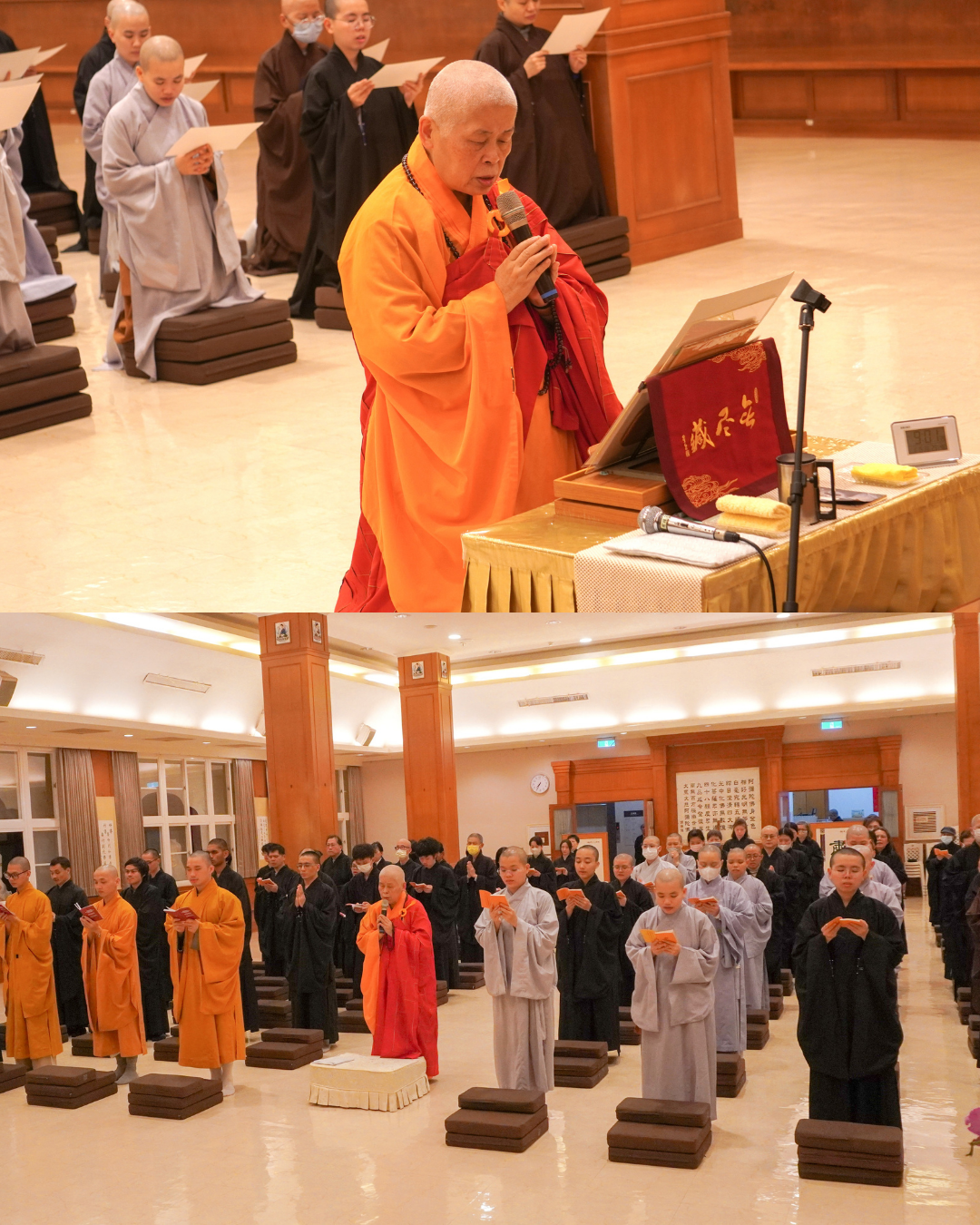
Department of Buddhist Studies at Fo Guang University organized its Practice-in-Action Experience Program. From January 18 to 23, sixty-seven students returned to Fo Guang Shan to participate in a seven-day Amitābha Buddha recitation retreat (Fo Qi).
Venerable Yongzang, Hall Director of Jingye Forest, presided over five daily incense sessions.
Recitation as the Bodhisattva Path
During the evening service on January 20, Venerable Yongzang explained that Fo Guang Shan’s advocated method of “free-rhythm recitation” is itself a form of practicing the Bodhisattva path.
For example, chanting the Buddha’s name aloud is a way of letting go of the self and blending one’s voice into the collective sound of the assembly. Only by entering fully into the community, he noted, can a bodhisattva truly speak of liberating others.
Recitation should achieve the “three arrivals”—mouth, ears, and mind all present—rather than chanting only for oneself like a solitary practitioner. Harmonizing with the group allows practitioners to support one another. In free-rhythm recitation, when one person pauses to breathe, another’s voice naturally rises, helping everyone maintain continuous pure mindfulness.
Each element of the ritual carries deep meaning. Even during silent pauses, one should continue reciting inwardly with the heart. Recitation strengthens mental focus and protects daily life from distraction and negative influences. During circumambulation, synchronizing recitation with breathing and pulse not only promotes physical well-being but also integrates Buddha-recitation into one’s very breath and life.
Teachings on Recitation Practice and Life Experience
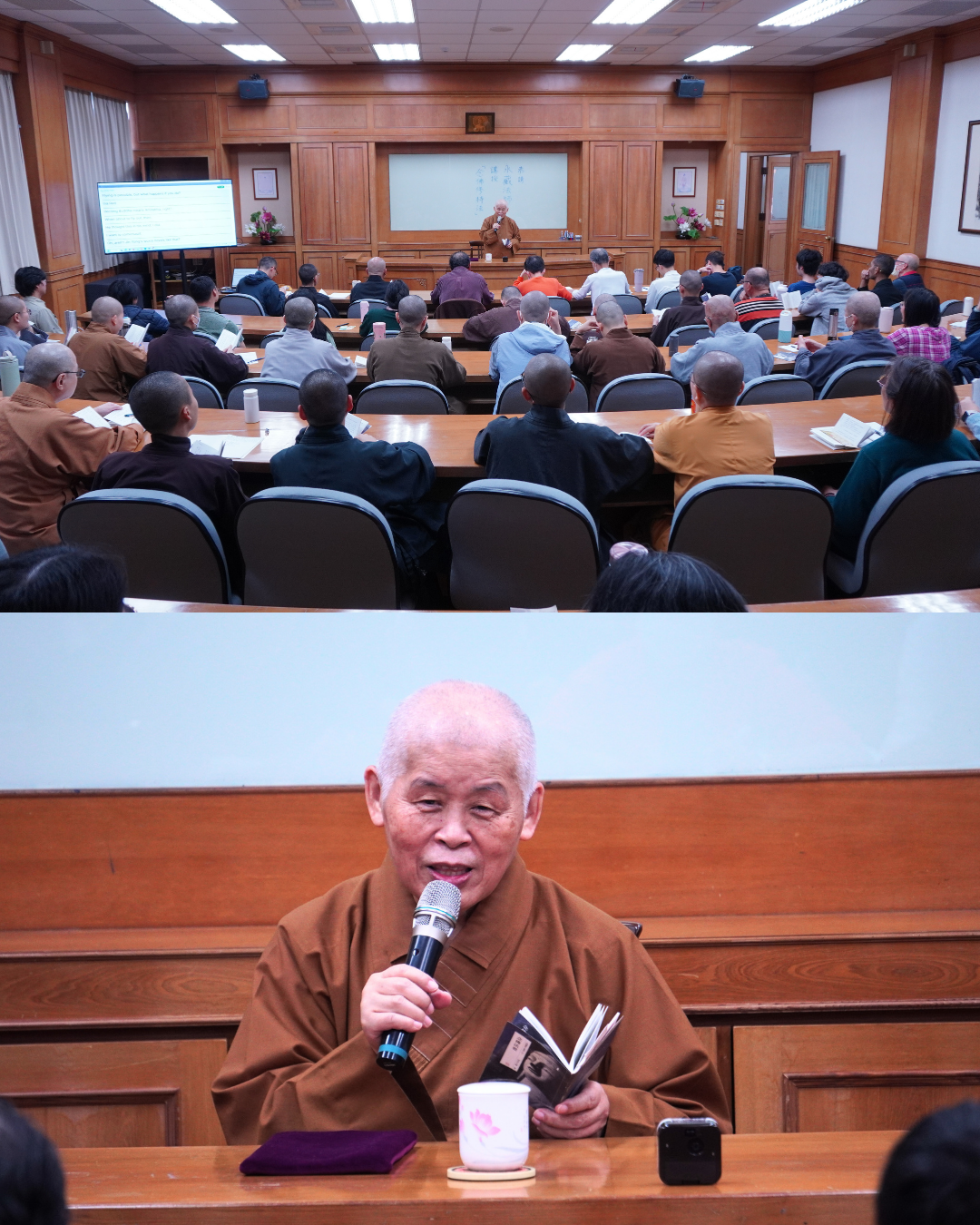
On the morning of January 21, Venerable Yongzang delivered a lecture on methods of Buddha-recitation practice, explaining the teachings found in Hsing Yun’s Essentials of Buddha-Recitation. He also shared stories from his life before ordination, drawing parallels between martial arts training and spiritual cultivation.
As a youth, he practiced martial arts due to poor health. Once, after defeating a challenger, he deliberately left the opponent a way out rather than causing harm, realizing that his temperament resonated more with Buddhism’s principle of non-harming. Later, after surviving a serious car accident, he recognized that no matter how advanced one’s martial skills, they are powerless before the realities of birth, death, and impermanence. By contrast, the Buddha—having resolved the great matter of life and death—remains unshaken, naturally inspiring reverence. This realization led him to ordain.
He summarized simply:
“Reciting the Buddha’s name is the most direct path to becoming a Buddha.”
He also noted that the “emptiness” in karate originally derives from the Buddhist concept of emptiness, and recounted how even highly skilled martial artists were humbled before masters of profound spiritual cultivation.
Reflecting with gratitude, he shared that Master Hsing Yun once assigned him to two years of quiet practice at Jingye Forest, followed by nine years as abbot of Xiaogang Lecture Hall. These experiences tested and deepened his recitation practice. Just as martial artists use strong vocal energy to steady themselves and unsettle opponents, practitioners should ask themselves whether their Buddha-recitation provides similar inner strength when facing the disturbances of daily life.
Group Reflection and Closing Dialogue
On the morning of January 23, a concluding forum was held with Venerable Yongzang, course instructor Venerable Zhiru, and Professor Tseng Chih-mien.
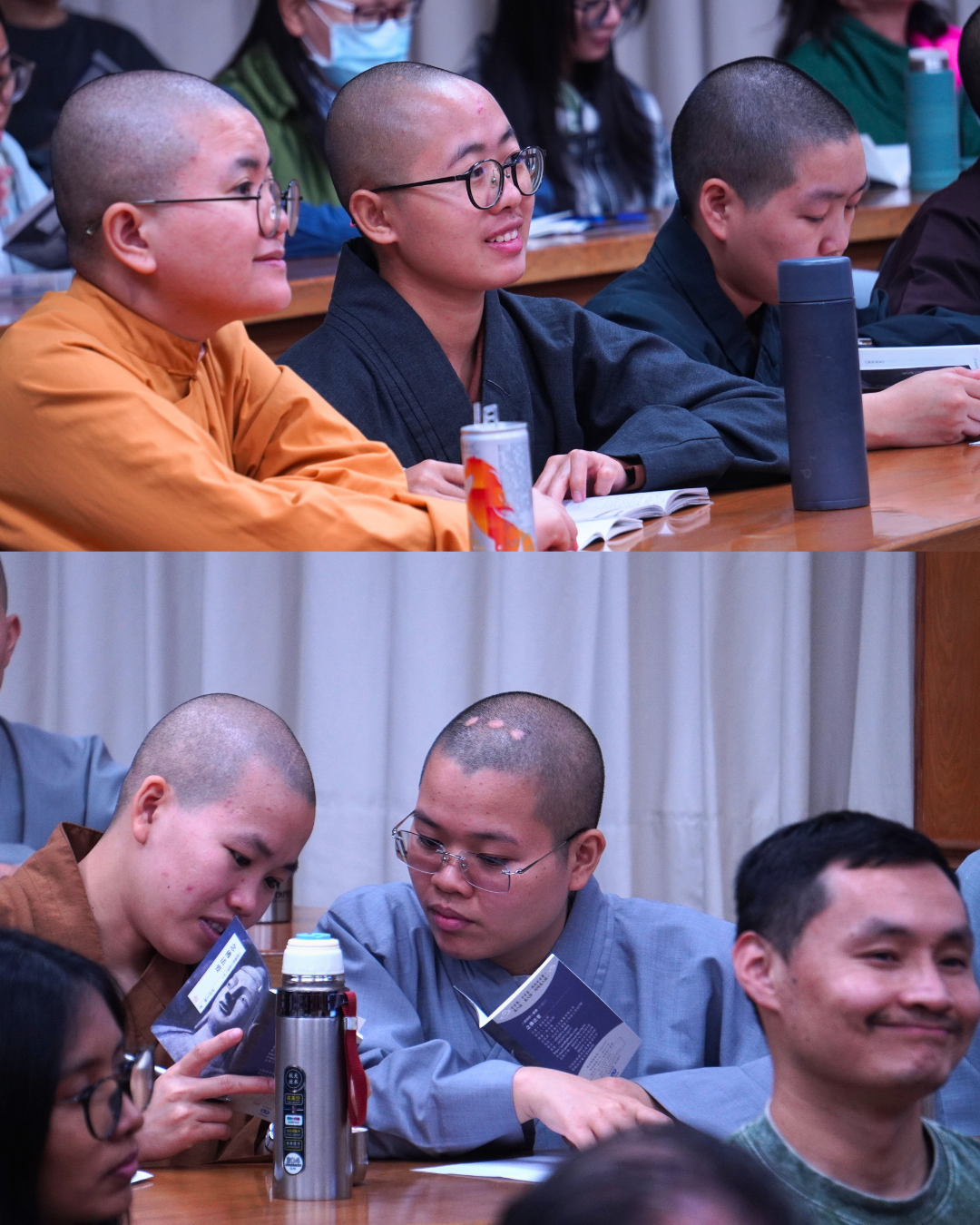
Students shared that their ability to remain focused during the retreat stemmed from the supportive environment of Fo Guang Shan, where monastics and volunteers from various units worked together to uphold the practice. They felt that Dharma teachings could be heard everywhere, reflecting Master Hsing Yun’s compassionate vision.
Venerable Yongzang concluded by emphasizing that Master Hsing Yun devoted his whole being to building Fo Guang Shan, creating today’s “Pure Land” where the Dharma is accessible in every corner.