 Facebook
 Instragram
 College and Department of Buddhist Studies, FGU
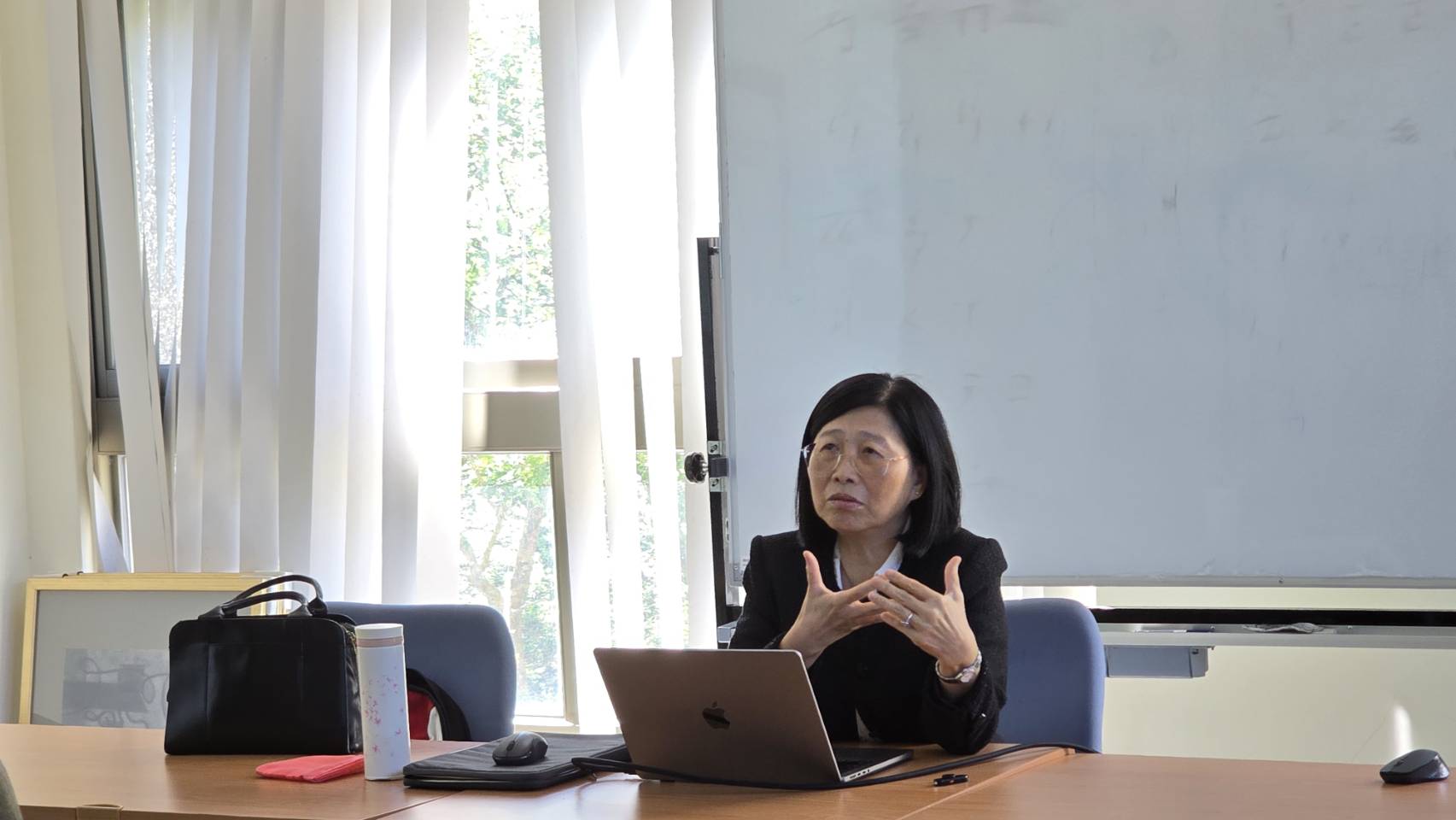
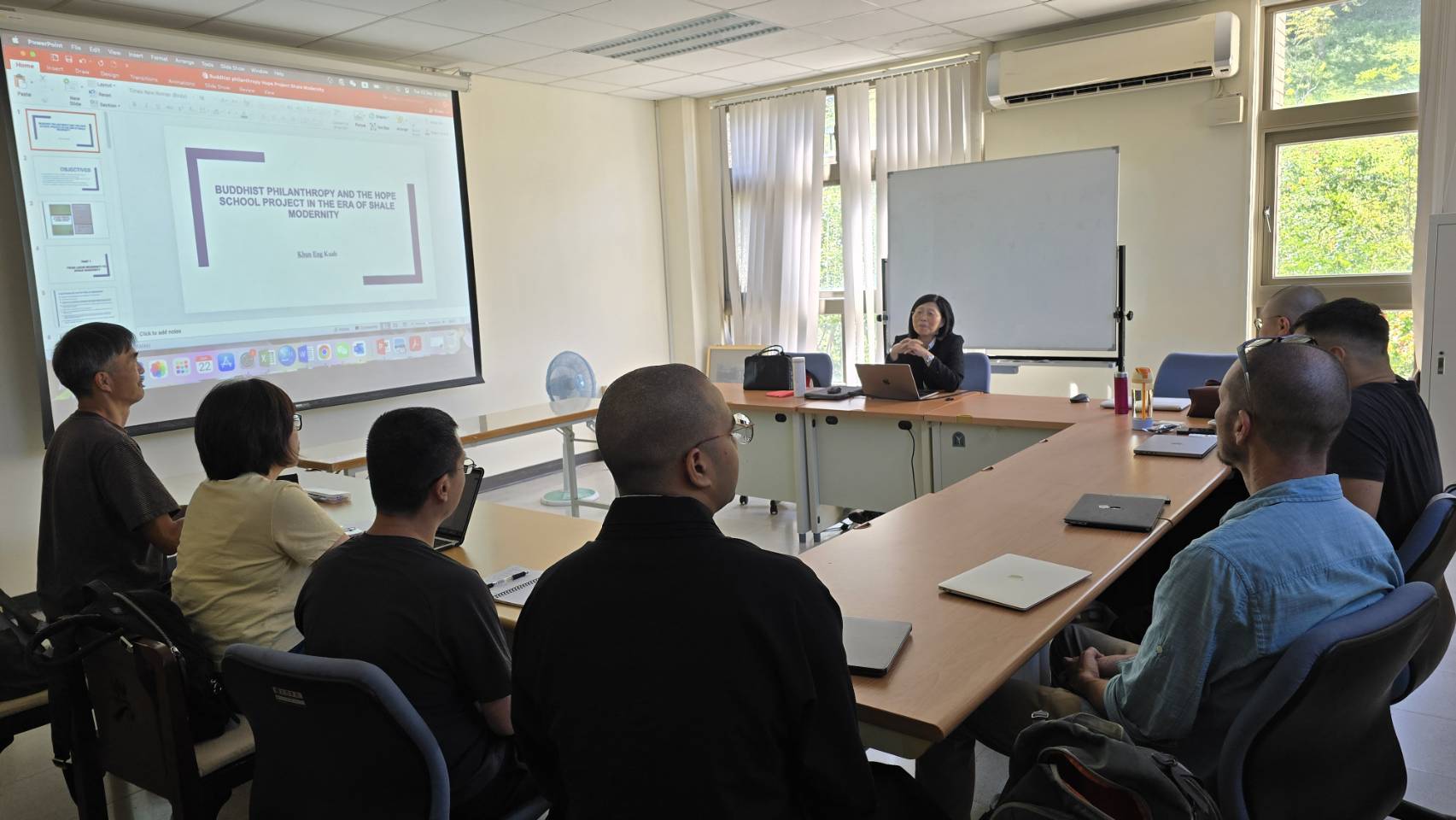
On 22 September 2026, the Department of Buddhist Studies welcomed Professor Khun Eng Kuah (柯群英教授), Adjunct Professor at the National University of Singapore (retired professor of University of Hong Kong), to deliver a guest lecture in English, entitled “Buddhist Philanthropy and the Hope School Project in the Era of Shale Modernity.” Drawing on her anthropological research on Chinese religion, Reformist Buddhism, compassion, and philanthropy, Professor Kuah introduced students to the relationship between sociological theory, Buddhist moral cultivation, and socially engaged practice.
Professor Kuah began by encouraging students to undertake detailed case studies while also considering the broader theoretical contribution of their research. Although close examination of a particular community or organisation is fundamental to anthropological research, she emphasised that researchers should ask how an individual case contributes to wider conversations in the social sciences. A strong case study should enable scholars working in different fields to understand one another’s research through shared analytical concepts.
The lecture then introduced Zygmunt Bauman’s theory of “liquid modernity.” In the earlier condition of “solid modernity,” institutions such as the family, workplace, community, and religion provided individuals with relative certainty, belonging, and security. Under liquid modernity, however, these structures have become decentralised, unstable, or even redundant. Traditional values and social norms are increasingly questioned, while individuals acquire greater responsibility for constructing their identities. Social media further accelerates this process by exposing people to diverse and sometimes conflicting values. Professor Kuah described this condition as the emergence of a “fluid ‘I’,” in which individuals seek the freedom to determine who they are rather than simply follow established expectations.
Extending Bauman’s argument, Professor Kuah proposed the concept of “shale modernity.” In this condition, the pursuit of wealth and individual success encourages individualisation and egocentric behaviour, while moral and ethical values become buried within the deeper layers of the individual psyche, like mineral fragments embedded in shale bedrock. These values do not disappear entirely. Instead, religion and socially engaged Buddhism can help excavate and reactivate them, enabling individuals to reconsider their moral responsibilities in an increasingly unequal and complex world.
Professor Kuah argued that religious organisations remain relevant in modern society when they respond meaningfully to contemporary social needs. Socially engaged Buddhism transforms compassion from an abstract teaching into concrete action. In a period marked by economic inequality and social suffering, Buddhist organisations and other religious non-governmental organisations can function as a “third force” alongside the state and the market. Through welfare provision, education, healthcare, disaster relief, and volunteerism, they redistribute resources and contribute to distributive social justice. From this perspective, wealth itself is not necessarily the central problem; the more important question concerns how wealth is used and whether it benefits those experiencing deprivation or suffering.
The production of a “compassionate field” requires more than moral teaching alone. Professor Kuah explained that moral teachings must be accompanied by moral persuasion and moral engagement before they can be transformed into compassionate or moral capital. Compassionate fields may begin locally but expand into regional and transnational networks. Their operation involves monastic and lay leadership, volunteers, donors, political institutions, and communication with social and political elites. Gender must also be taken seriously, since women have played indispensable roles in Buddhist philanthropy despite the continuing difficulty they face in reaching the highest levels of religious leadership.
Buddhist concepts such as karma (業), gratitude (感恩), merit-making, and the field of merit (福田) provide an ethical language through which practitioners interpret philanthropic action. Professor Kuah stressed that gratitude is a reciprocal process involving both giving and receiving. This relationship is especially evident in Tzu Chi’s ideal of universal love (大愛), through which volunteers understand recipients of assistance as providing them with opportunities to cultivate compassion. Buddhist teachings are therefore embedded in everyday life rather than treated merely as abstractions. By repeatedly performing compassionate acts, volunteers cultivate a disciplined Buddhist self and enact the ideal of the “this-worldly bodhisattva.”
The Hope School Project in economically disadvantaged regions of interior China provided the lecture’s principal case study. Buddhist temples and organisations mobilised donations, social connections, professional knowledge, and local partnerships to reconstruct schools and improve educational opportunities. When religious organisations lacked the necessary expertise, they collaborated with people who understood local conditions and could implement the projects effectively. The initiative consequently formed a cross-border compassionate field connecting Buddhist teachings, organisational networks, and regional philanthropy.
Professor Kuah concluded that the study of Buddhist philanthropy helps scholars understand how religious teachings are translated into sustained social action. Her lecture demonstrated that compassion is not simply an individual feeling: it is cultivated through moral discipline, charismatic leadership, institutional networks, and everyday practices of giving and volunteerism. The lecture was followed by a bilingual question-and-answer session, allowing students to exchange ideas with Professor Kuah about anthropological research, Buddhist social engagement, and the wider significance of religious compassion in contemporary society.