 FGU
FGU

 College and Department of Buddhist Studies, FGU
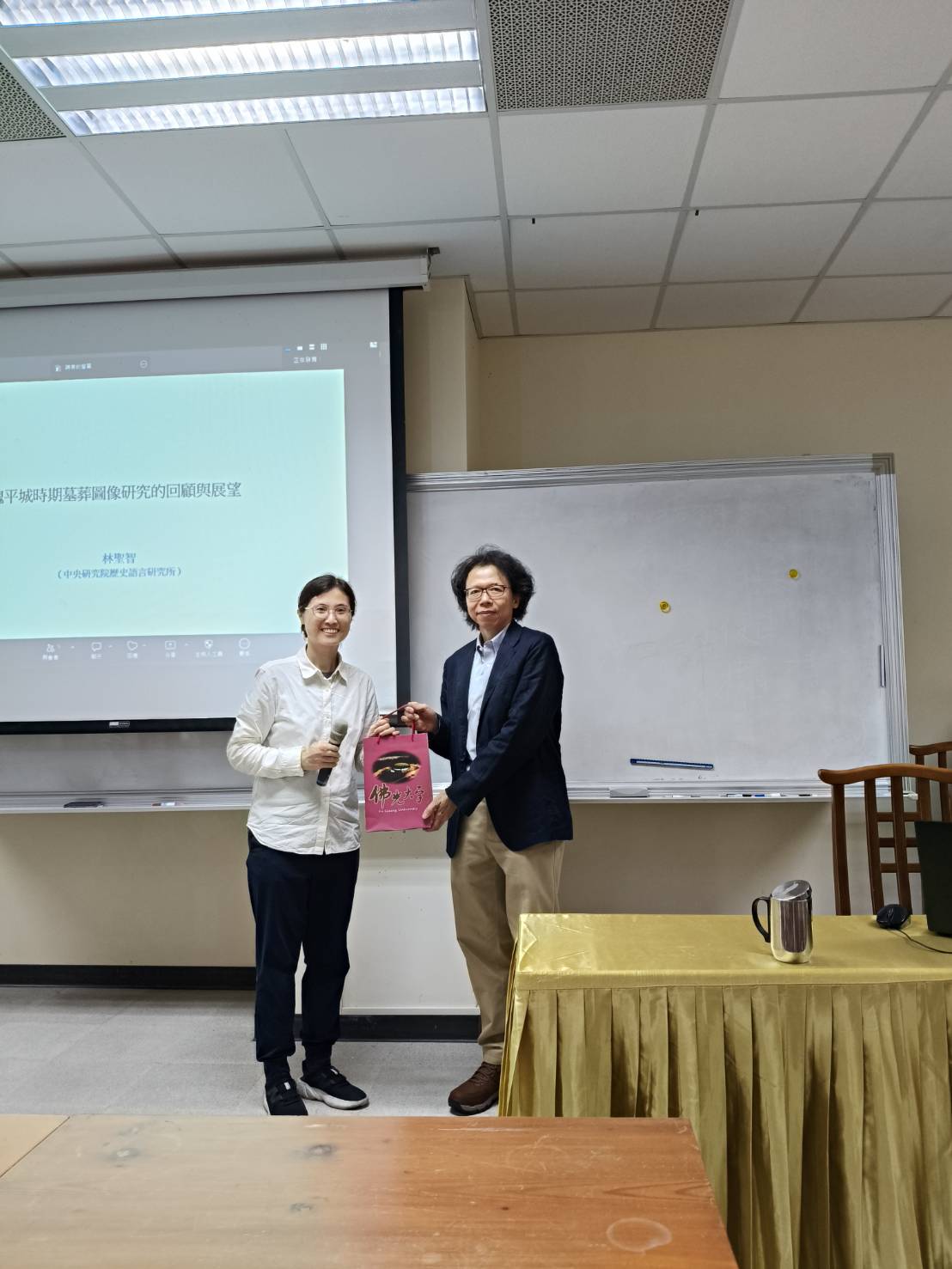
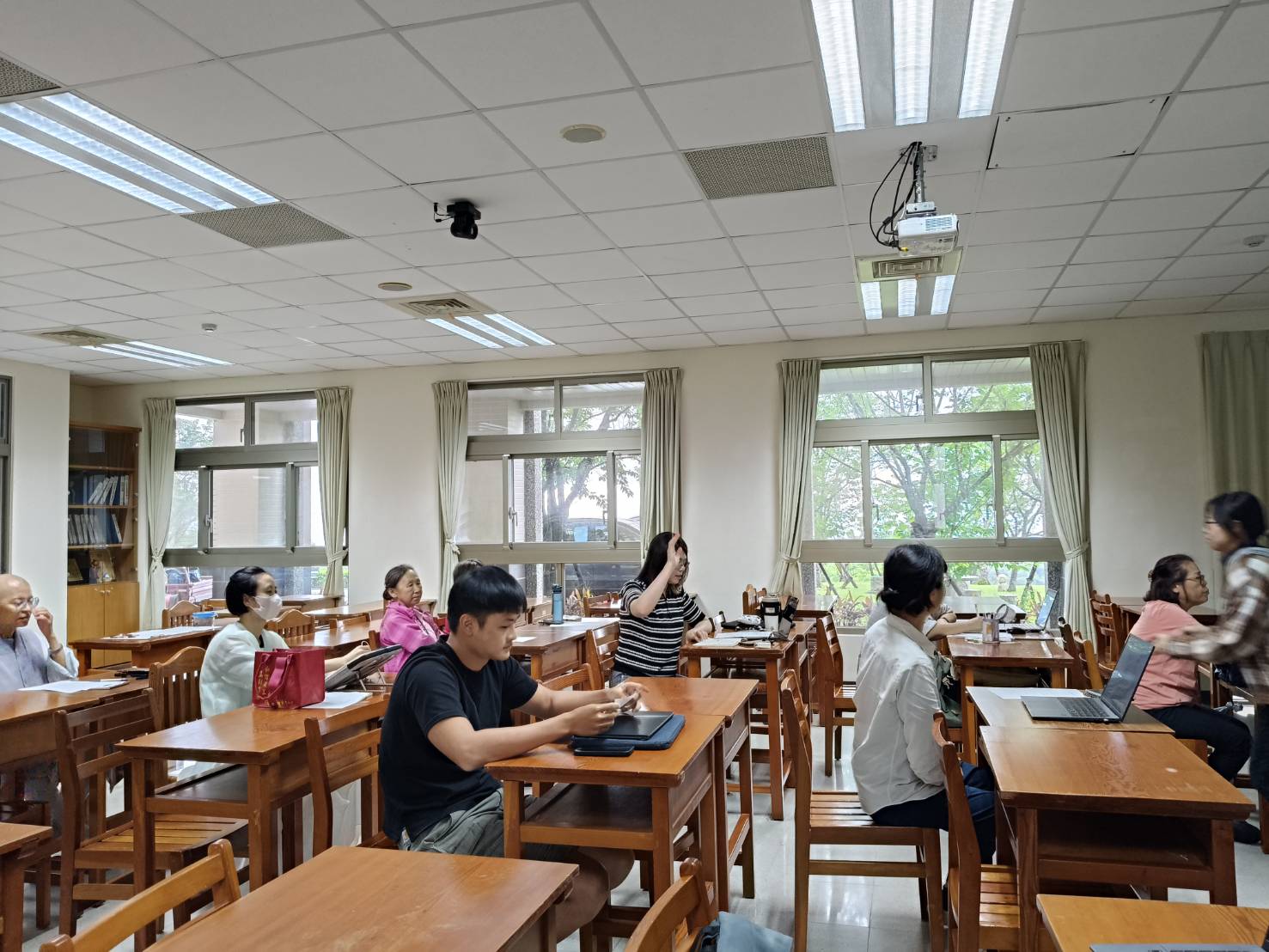
On June 9, 2026, the Buddhist Research Center at Fo Guang University hosted a Buddhist Teaching Workshop featuring a special lecture by Professor Lin Sheng-chih, Research Fellow and Deputy Director of the Institute of History and Philology, Academia Sinica. His lecture, entitled “Research on and Future Perspectives of Tomb Imagery from the Pingcheng Period of the Northern Wei Dynasty,” focused on the historiography of Northern Wei tomb imagery, archaeological materials, artistic styles, and the role of Buddhist elements in funerary art.
Professor Lin began with a comprehensive review of the scholarship on tomb imagery from the Pingcheng period of the Northern Wei Dynasty. He noted that research in this field can generally be divided into three stages. The first stage, spanning approximately 1965 to 2005, may be described as the period of “initial discoveries.” During this phase, studies were primarily based on newly excavated archaeological materials and preliminary documentation. Important discoveries—including the Sima Jinlong Tomb in Datong, Shanxi, the Northern Wei lacquered-coffin tomb in Guyuan, Ningxia, and several Northern Wei tomb complexes in the Datong region—gradually drew scholarly attention to the significance of Pingcheng tomb imagery within the broader history of Northern Dynasties art.
The second stage, from 2005 to 2017, was characterized by the continuous excavation of new materials. The growing corpus of stone funerary structures, mural tombs, and tomb complexes expanded the scope of research beyond individual burials to encompass regional culture, funerary systems, and the functions of tomb imagery. During this period, scholars increasingly examined the relationships among Buddhist imagery, decorative programs, tomb occupants’ identities, and ethnic-cultural backgrounds.
The third stage, from 2017 to 2026, has seen research move toward more integrated studies of Pingcheng and its surrounding regions. Professor Lin explained that recent scholarship no longer treats tomb imagery as isolated artistic artifacts. Instead, it situates these visual materials within broader contexts of Northern Wei politics, ethnicity, religion, and regional cultural interactions. Particular attention has been given to Pingcheng’s role as the early capital of the Northern Wei and to the ways in which the Tuoba Xianbei ruling elite expressed cultural identity and political order through tomb imagery, funerary architecture, and Buddhist motifs.
Before turning to the visual materials themselves, Professor Lin reviewed transformations in funerary art during the Wei, Jin, and Sixteen Kingdoms periods. He observed that the practice of “simple burial” (bozang) became increasingly influential in the Central Plains after the Han dynasty, gradually replacing traditions of elaborate burials featuring pictorial stones and mural tombs. Nevertheless, certain Eastern Han mural traditions survived in peripheral regions such as Hexi, Liaodong, and Goguryeo, providing important background for understanding the development of Pingcheng tomb imagery.
Professor Lin emphasized the transitional significance of the Pingcheng period (398–493 CE). Not only did it mark the emergence of new forms of tomb imagery in Northern China, but it also reflected issues of political identity, regional cultural integration, and the growing prominence of Buddhist imagery and ornamentation in funerary spaces. Framing his discussion around the question, “Who were the Tuoba Xianbei?”, he cautioned against reducing the Northern Wei to a single ethnic or cultural entity. Rather, it should be understood as a tribal confederation composed of multiple nomadic groups, embodying both the history of Inner Asian nomadic societies and that of Chinese dynastic rule.
Throughout the lecture, Professor Lin introduced a range of important archaeological materials, including the Shaling Mural Tomb in Datong, the Jiexing Stone Hall, the Zhang Zhilang Stone Hall, the stone sarcophagus of Song Shaozu, the Sima Jinlong Tomb, the Yonggu Mausoleum at Fangshan, and the Northern Wei lacquered-coffin tomb in Guyuan, Ningxia. Among these, the Shaling Mural Tomb, dated to 435 CE, is one of the earliest securely dated mural tombs of the Northern Wei currently known. Using this example, Professor Lin raised a central question: Were these tomb images merely continuations of Han dynasty mural traditions, or did they represent the beginning of a new visual culture in the Northern Dynasties?
Drawing on murals, stone halls, sarcophagi, and lacquered coffins, Professor Lin analyzed combinations of visual motifs such as horses and riders, ox carts, mythical creatures, Fuxi and Nüwa, the Queen Mother of the West, the King Father of the East, donors, monks, and Buddhist themes. He argued that Pingcheng tomb imagery did not simply inherit Han traditions but instead developed a new visual language through the interaction of multiple cultural influences.
Particularly noteworthy was his discussion of Buddhist elements. The appearance of Buddhist imagery in funerary contexts suggests that Buddhism was more than a religious belief system; it had become an important component of tomb space, representations of the afterlife, and expressions of social identity. Images of monks, donors, and incense burners carved on stone halls, for example, reveal the integration of Buddhist ritual practices and concepts of merit-making into funerary culture. As a result, Northern Wei tomb imagery offers valuable evidence for understanding medieval Buddhist art, mortuary ritual systems, and broader social and cultural transformations.
In the concluding section of the lecture, Professor Lin outlined four promising directions for future research: (1) reconstructing the stylistic genealogy of Northern Wei figure painting; (2) investigating interactions between Pingcheng and neighboring regional cultures; (3) examining the relationship between mural themes and the social status of tomb occupants; and (4) reassessing the significance of Buddhist elements within Northern Wei funerary imagery. Pursuing these directions, he argued, will not only enrich the study of Northern Dynasties art history but also contribute to research on Buddhist history, ethnic identity, funerary culture, and the visual culture of medieval China.
Rich in both detail and insight, the lecture demonstrated Professor Lin’s mastery of the field through a clear historiographical review, meticulous visual analysis, and broad historical perspective. His presentation offered participants a renewed appreciation of the scholarly significance of tomb imagery from the Pingcheng period of the Northern Wei Dynasty.