 FGU


 College and Department of Buddhist Studies, FGU
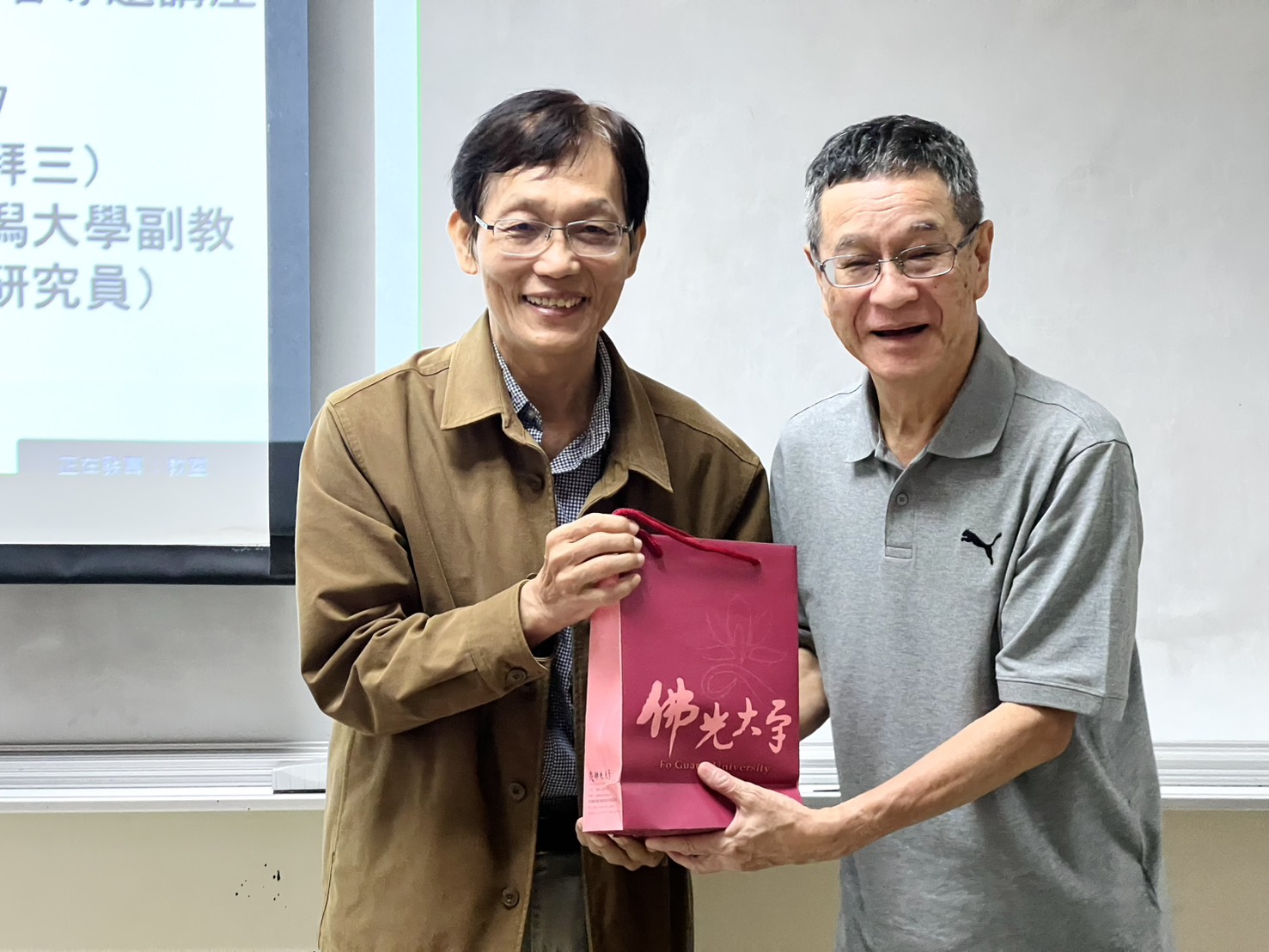
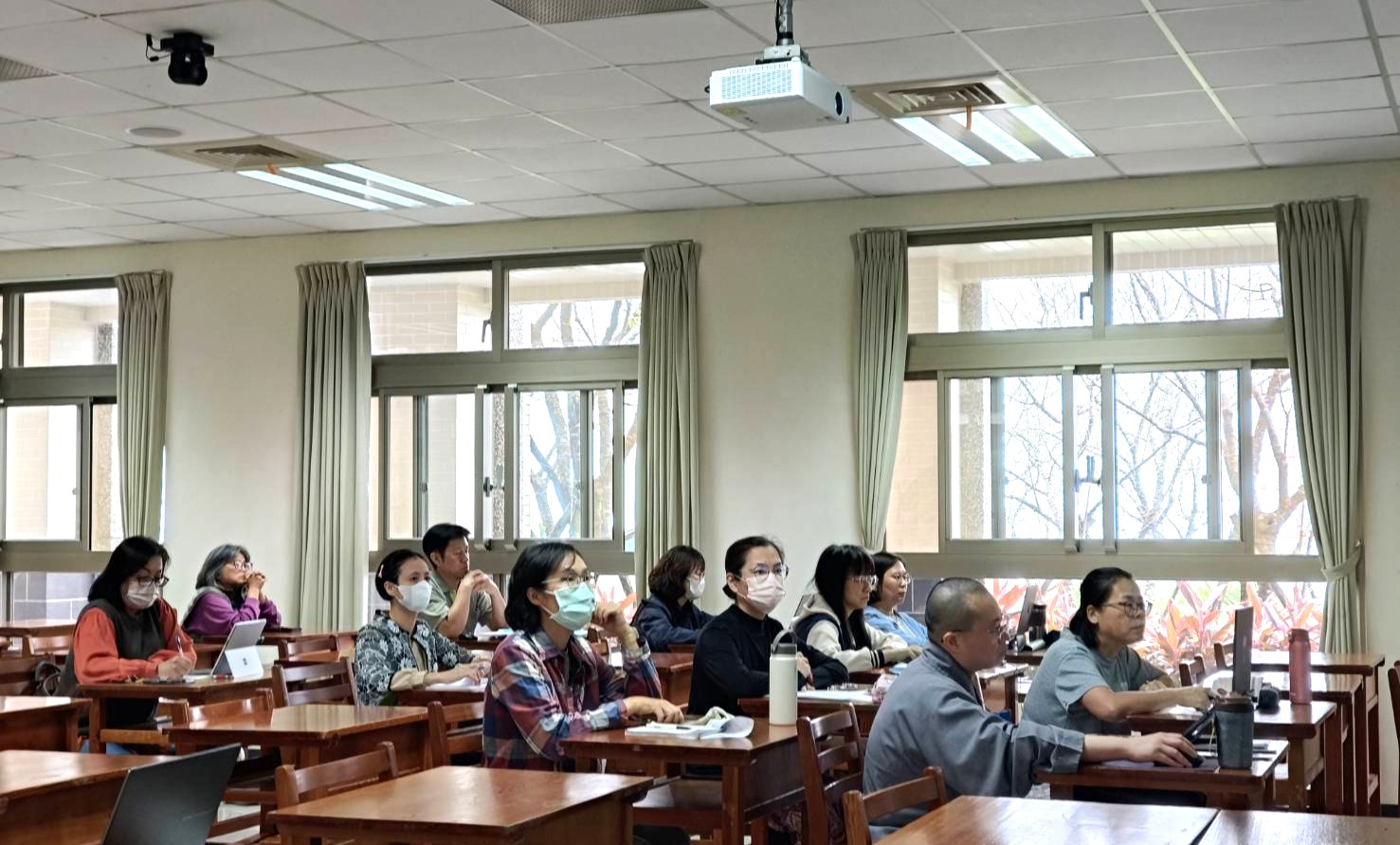
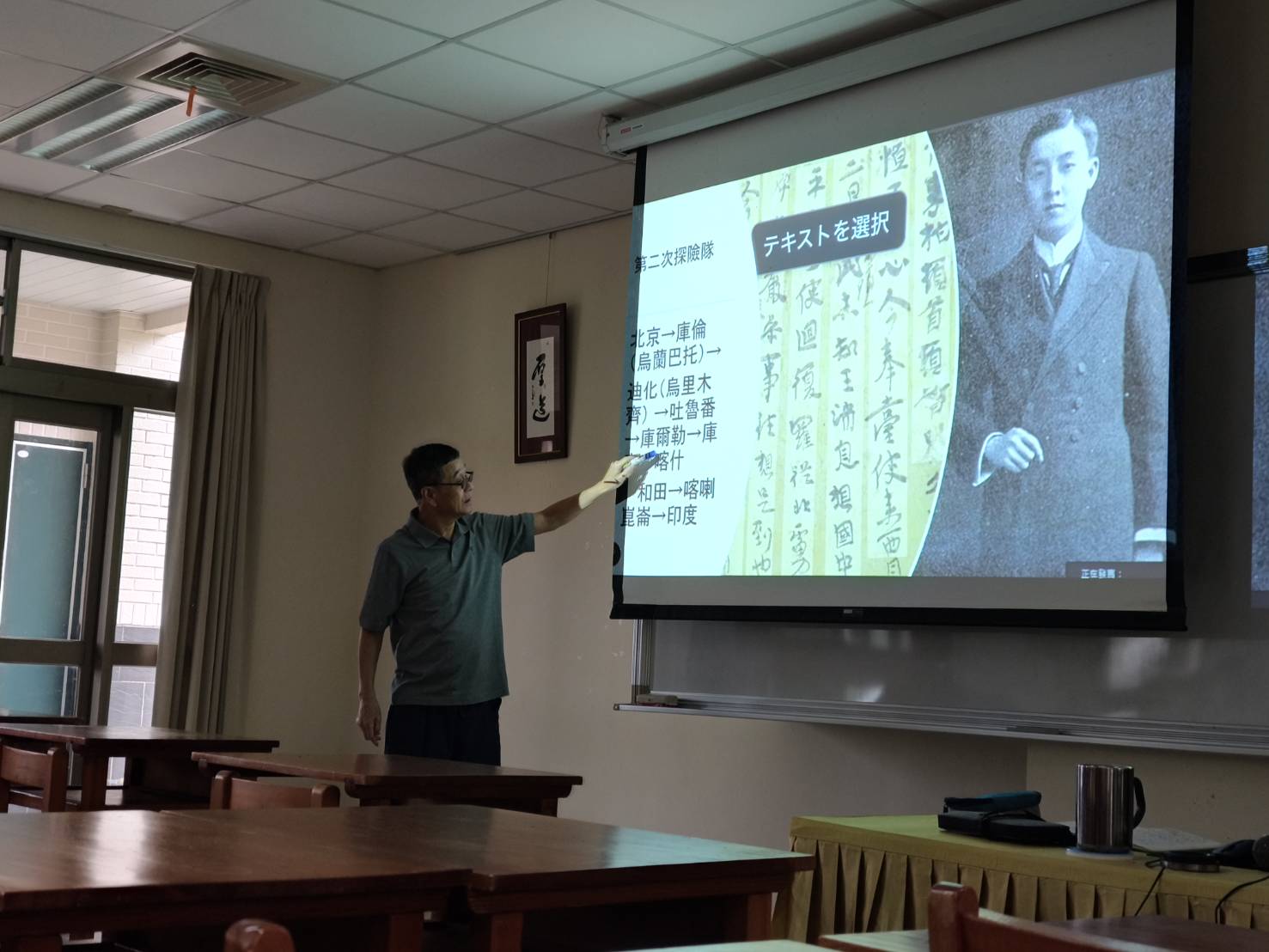
On October 28, the Center for Buddhist Studies at Fo Guang University hosted a lecture as part of its "International Distinguished Lecture Series" in Room N117, Yunshui Building. Prof. Mikio Shibata—a renowned Japanese scholar of Kōzui Ōtani and former associate professor at Niigata University—was invited to speak on "Kōzui Ōtani and Dunhuang Artifacts: The Ōtani Expeditions and Central Asian Archaeology." Centering on Ōtani’s life, Prof. Shibata drew on extensive historical photographs and archival documents to transport faculty and students back to the archaeological landscapes of early 20th-century Central Asia, illuminating the deep historical ties between this prominent Japanese religious figure, China, and Taiwan.
The lecture was moderated by Prof. Chen-tsung Kan of the Department of Buddhist Studies at Fo Guang University, an expert in Taiwanese Buddhist history and Sino-Japanese Buddhist interactions. Born in Osaka in 1955, Prof. Shibata earned his graduate degree from Ryukoku University and his doctorate from Hiroshima University. He currently serves as a visiting researcher at Ritsumeikan University, having dedicated many years to the study of Kōzui Ōtani and modern Chinese history.
Prof. Shibata explained that Kōzui Ōtani (1876–1948) was the 22nd Abbot (Monshu) of the Jōdo Shinshū Hongwanji-ha (Nishi Hongwanji) and held the peerage title of Count (Hakushaku). However, his vision extended far beyond religion: he was simultaneously the initiator of Central Asian expeditions, a supporter of the 1911 Xinhai Revolution, and a pioneer in tropical agriculture. During his first visit to China in 1899, Ōtani contemplated the future of his nation and religion, leading him to explore the historical roots of Buddhism. He first traveled to India to verify the archaeological sites of Vulture Peak (Gṛdhrakūṭa) and Rājagṛha, and later engaged with famed explorers including Sven Hedin, Aurel Stein, and Paul Pelliot in the United Kingdom, ultimately orchestrating three major Ōtani Expeditions.
Discussing the achievements of these missions, Prof. Shibata noted that between 1902 and 1914, the three expeditions traversed Turfan, Kucha, Khotan, Loulan, and Dunhuang. The second expedition unearthed the valuable "Li Bai Documents" (Li Bo Documents), while the third—the largest in scale—brought back numerous Dunhuang manuscripts, Turfan murals, and Tang-era mummies. He emphasized that the Dunhuang Library Cave, discovered in 1900, preserved more than 60,000 multilingual documents; beyond Buddhist scriptures, these include contracts, letters, and administrative records. "Dunhuang is not merely a treasure trove of Buddhist history, but also an immense archive of social history," Prof. Shibata remarked. Today, these artifacts are dispersed across institutions such as the Lushun Museum, the National Museum of Korea, and Ryukoku University.
The lecture also touched upon Ōtani’s connections with Taiwan. Prof. Shibata recounted that Nishi Hongwanji began its missionary work in Taipei as early as 1896, and the site of its former Taipei Betsuin branch temple has since been restored as a public plaza. In his later years, Ōtani devoted himself to promoting industries in Taiwan, establishing the villa Shōyō-en (Xiaoyaoyuan) in Kaohsiung in 1940, which today stands as a designated historic heritage site. Furthermore, Ōtani maintained close ties with Sun Yat-sen, serving as Supreme Advisor to the Guangdong Revolutionary Government; following World War II, war crime allegations against him were dismissed through arrangements made by Chiang Kai-shek.
Reflecting on how to evaluate the Ōtani Expeditions, Prof. Shibata observed that Ōtani advocated understanding Buddhism through historical and archaeological inquiry, with the expeditions serving as the practical embodiment of this conviction. At the same time, his ideology of "Revitalizing Asia and Promoting Buddhism" carried distinct Pan-Asianist undercurrents and must be examined with critical rigor within the context of modern history. By weaving together religious history, modern history, Taiwanese history, and Central Asian archaeology, this lecture broadened interdisciplinary perspectives for both faculty and students. The Center will continue to invite international scholars to foster deeper global academic exchange.