 FGU
FGU

 College and Department of Buddhist Studies, FGU
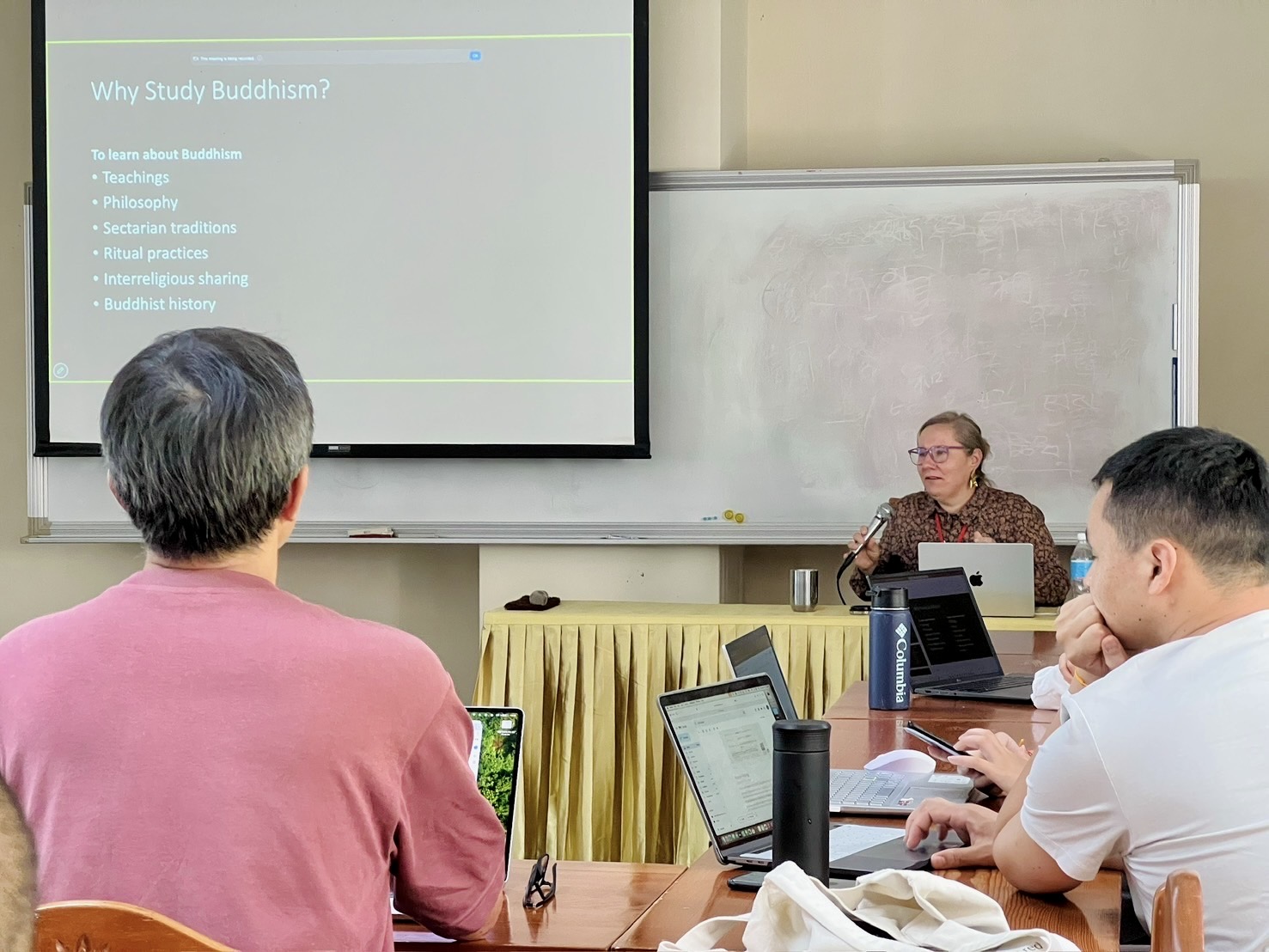
On the first day, in the lecture titled “Why Study Women through Buddhism? Methodological Reflections on Buddhist Sources and Women’s History,” Professor Balkwill argued that conventional secular historiography contains relatively limited documentation of women, resulting in their long-standing marginalization in historical narratives. In contrast, Buddhist sources—such as inscriptions, dedicatory records on images, and textual materials—preserve abundant evidence of women’s activities, thereby offering crucial resources for reconstructing women’s histories. Methodologically, she proposed a “Buddhist feminist historiography” that centers Buddhist materials as primary sources for rewriting women’s history. She emphasized that women’s participation in Buddhist contexts was comparatively more visible than in other historical domains, whether as devotees, donors, or agents of cultural production. Through textual and visual evidence, scholars are thus able to reassess women’s agency and roles in historical processes.
The lecture further examined the cases of Empress Dowager Ling of the Northern Wei and Wu Zetian, illustrating how Buddhist perspectives enable a re-evaluation of women’s political and religious authority. Analysis of Buddhist sources allows these figures—often ambiguously represented in traditional historiography—to emerge with greater historical depth and specificity.
The second day’s reading seminar, titled “Interpretations of the Female Body in Mahāyāna Buddhism,” addressed the question of whether women must transform into men in order to attain Buddhahood. Drawing on the story of the Dragon Girl’s enlightenment in the Lotus Sutra and the episode of the goddess’s transformation in the Vimalakirti Sutra, Professor Balkwill analyzed the differing implications of gender transformation in canonical narratives. She argued that such transformations are not merely about bodily change, but rather serve to illuminate the doctrine of emptiness, demonstrating that both gender and the body lack inherent, fixed essence.
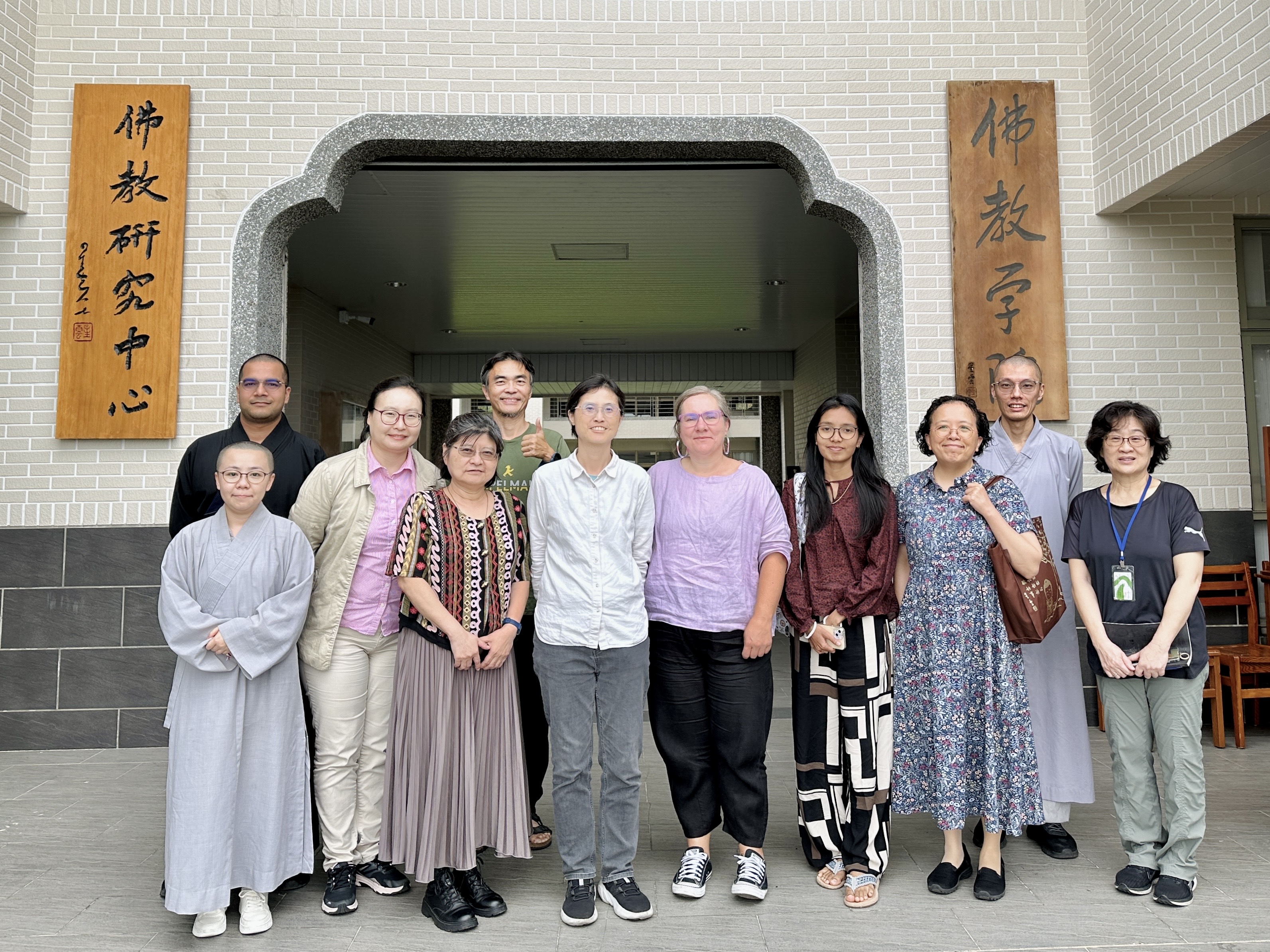
At the theoretical level, she introduced the concept of the Two Truths to explain how Buddhism simultaneously affirms the emptiness of gender and its conventional efficacy in worldly contexts. From this perspective, Buddhist texts not only provide a framework for understanding premodern gender constructs but also offer interpretive resources for contemporary gender discourse. The two-day event was attended by over a dozen faculty members and students, with lively discussions throughout. Professor Balkwill also shared her recent publications and encouraged students to cultivate both critical thinking and intellectual composure in their academic pursuits.
Her recent monograph is available for open access and may be consulted by scholars and the general public at the following link: https://storage.googleapis.com/rua-ucp/files/books/209/233c70ef-6d86-491a-9d09-ed33189bd2db.pdf