 FGU
FGU

 College and Department of Buddhist Studies, FGU
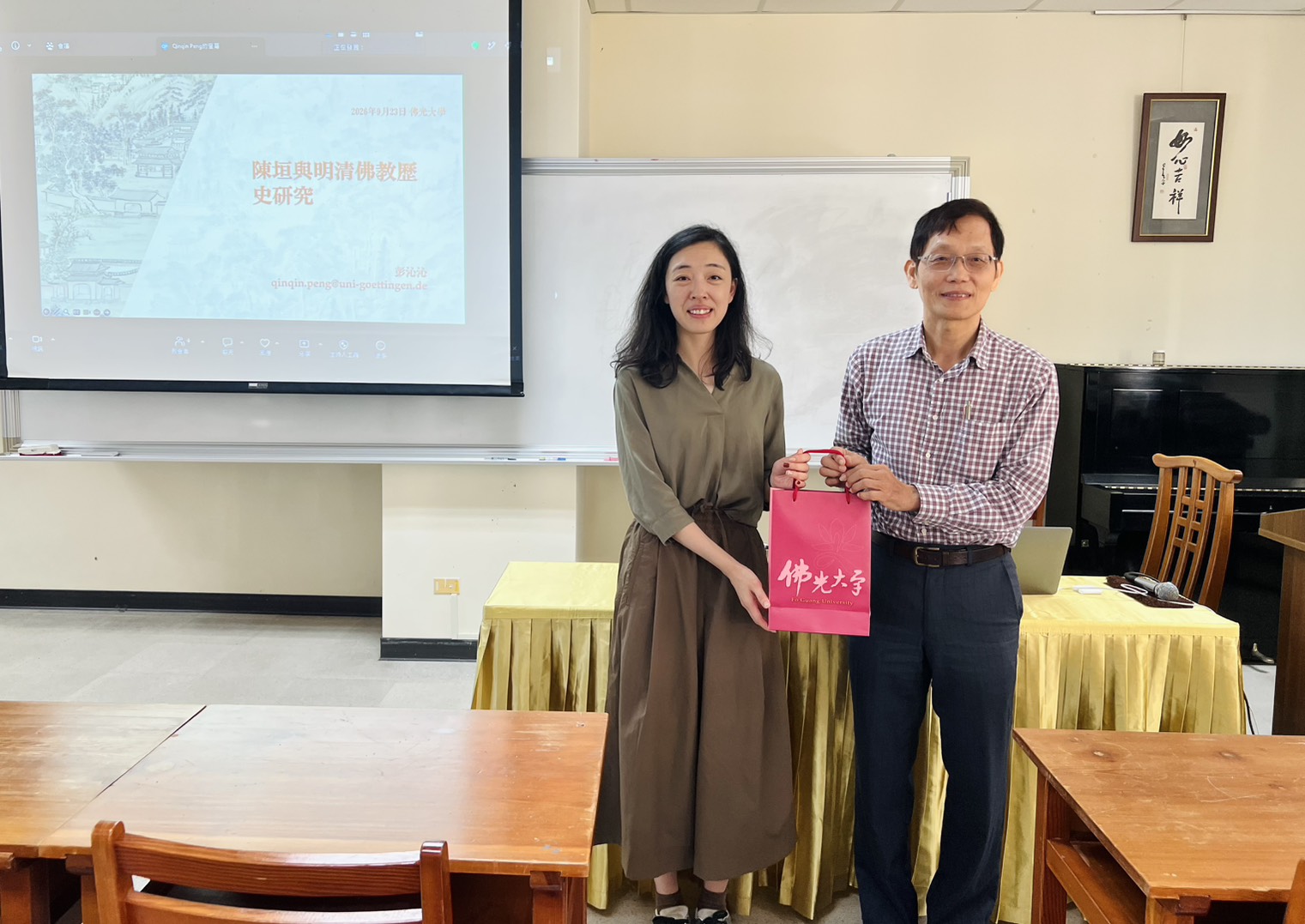
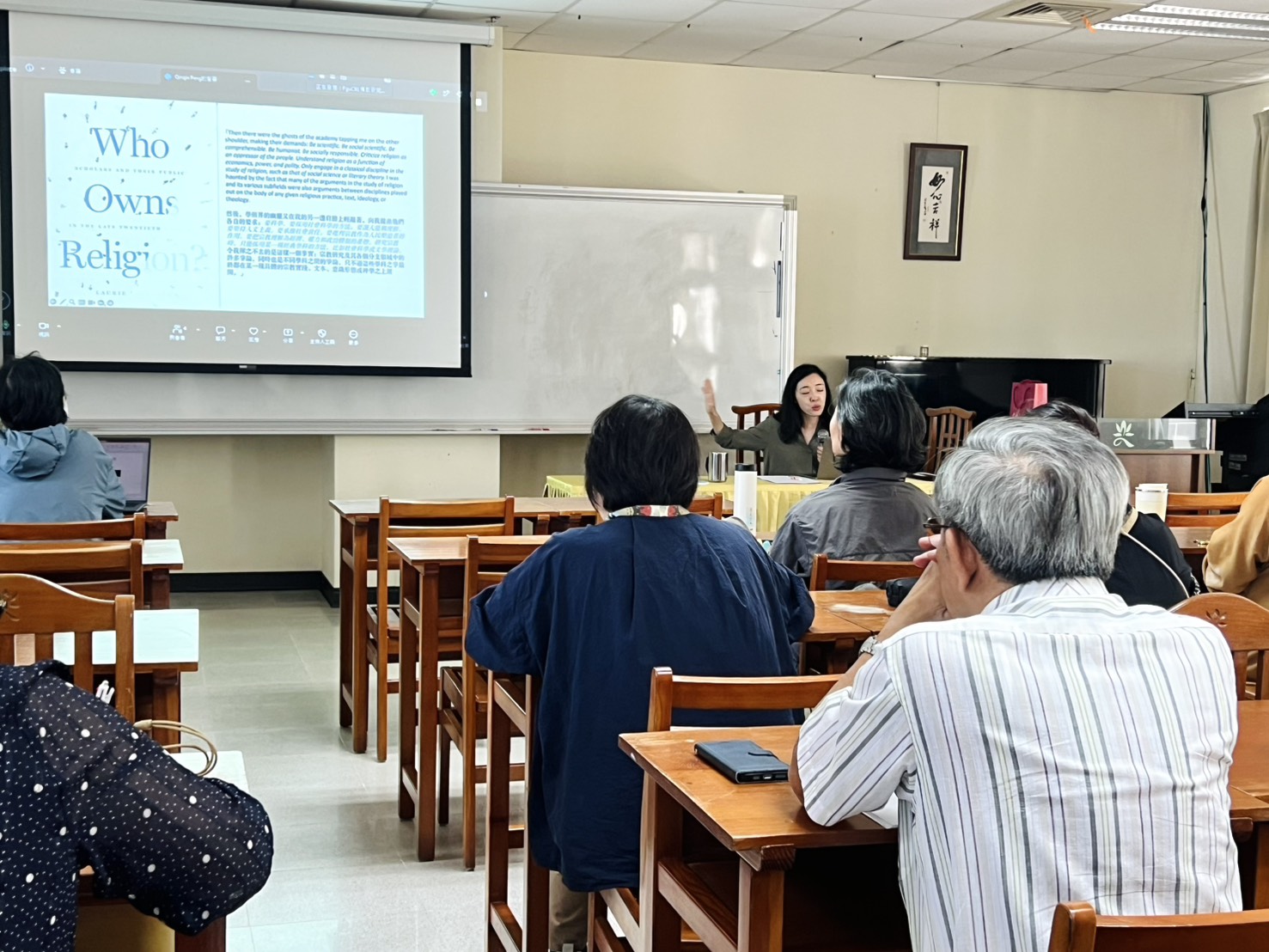
On 23 September 2026, the Center for Buddhist Studies at Fo Guang University hosted a lecture in its International Distinguished Scholars Lecture Series, delivered by Assistant Professor Peng Qinqin of the Department of East Asian Studies at the University of Göttingen, Germany. Entitled “Chen Yuan and Modern Historical Research on Ming–Qing Buddhism,” the lecture situated Chen’s pioneering contributions to the study of Ming–Qing Buddhist history within the emergence of modern Buddhist historiography. It examined his historical methods, use of source materials, and approach to the study of religion.
Professor Peng began by observing that the emergence of modern Buddhist historiography was closely associated with shifts in historical scholarship since the early twentieth century. Scholars sought to reconstruct reliable knowledge of the Buddhist past and to reinterpret the development of Buddhism in Chinese history through the terminology, theories, and methods of modern historical inquiry. Within this context, Buddhism became a subject not only of religious self-representation but also of broader discussions of Chinese national and cultural history, social history, and intellectual history.
The lecture focused particularly on Chen Yuan’s An Investigation of Buddhism in Yunnan and Guizhou during the Late Ming (《明季滇黔佛教考》) and An Account of Monastic Controversies in the Early Qing (《清初僧諍記》). The former examines the flourishing of Buddhism in late-Ming Yunnan and Guizhou, incorporating Buddhist recorded sayings into historical analysis to explore the relationship between religion and culture. The latter investigates disputes within the early-Qing monastic community over doctrine, moral principles, and personal integrity. It reveals the complex relationship between religion and politics, which, although distinct, are often difficult to disentangle.
Professor Peng further explained Chen’s emphasis on recovering scattered textual materials and identifying new historical sources. Chen likened the discovery of new materials to “mining copper from the mountains.” He argued that the apparent absence of historical evidence did not necessarily indicate the absence of a historical past; rather, relevant records might never have been produced, might not have survived, or might remain unknown to researchers. Accordingly, transmission-of-the-lamp records, recorded sayings, monastic biographies, inscriptions, and sources outside the Buddhist tradition could all provide important evidence for reconstructing Buddhist history.
Chen also maintained that Buddhist doctrine could be studied through Buddhist texts, whereas Buddhist history required corroboration from sources outside the tradition. Such sources could supplement gaps in Buddhist historical accounts, correct occasional errors, and be examined alongside Buddhist materials, thereby situating Buddhist history within broader historical and social contexts. Professor Peng attributed the exemplary status of Chen’s scholarship to his rigorous treatment of sources, systematic organization, and clearly formulated research questions.
Through this examination of Chen Yuan’s contributions to modern research on Ming–Qing Buddhist history, the lecture encouraged faculty and students to reconsider the formation of modern Buddhist historiography, the evidentiary foundations of Ming–Qing Buddhist studies, and the relationship between internal and external perspectives in the study of religion.