 FGU
FGU

 College and Department of Buddhist Studies, FGU
[The Merit Times / Reported by Zhi Wen, Dashu, Kaohsiung] 2026-06-30
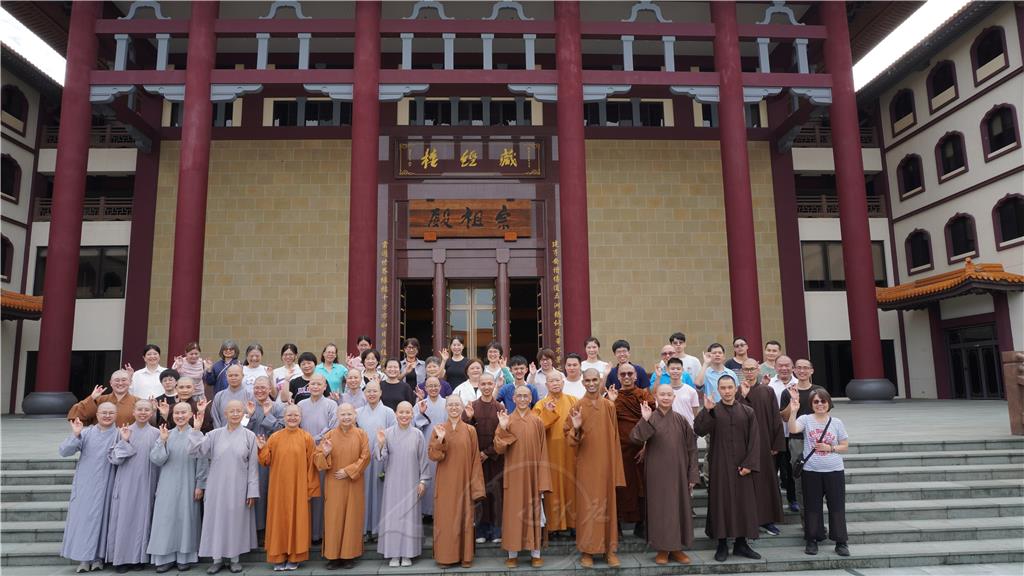
On June 29, sixty students from the Department of Buddhist Studies at Fo Guang University (FGU) gathered at the Tathagata Main Sanctuary of Fo Guang Shan to listen to a Dharma lecture by the Most Venerable Hsin Bao, the Abbot of Fo Guang Shan. Focusing on the "Four Foundations of Mindfulness" (Four Smrtyupathanas), the Abbot explained that the core of meditation lies in eradicating afflictions and realizing the truth of non-self. He encouraged the students to cherish their rare opportunity to hear the Dharma, practice diligently, and integrate Buddhist teachings into their daily lives to advance on the path to liberation. 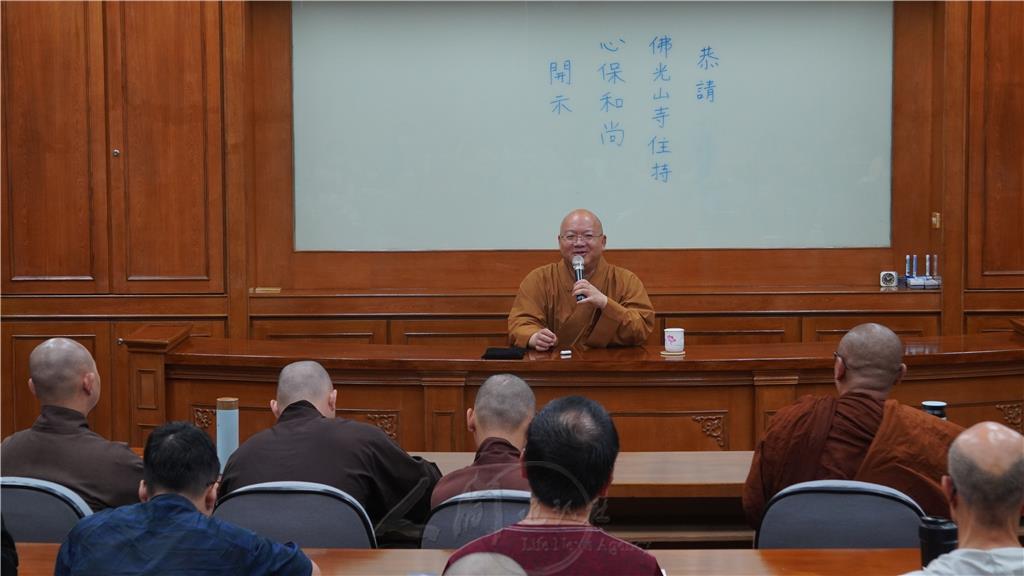
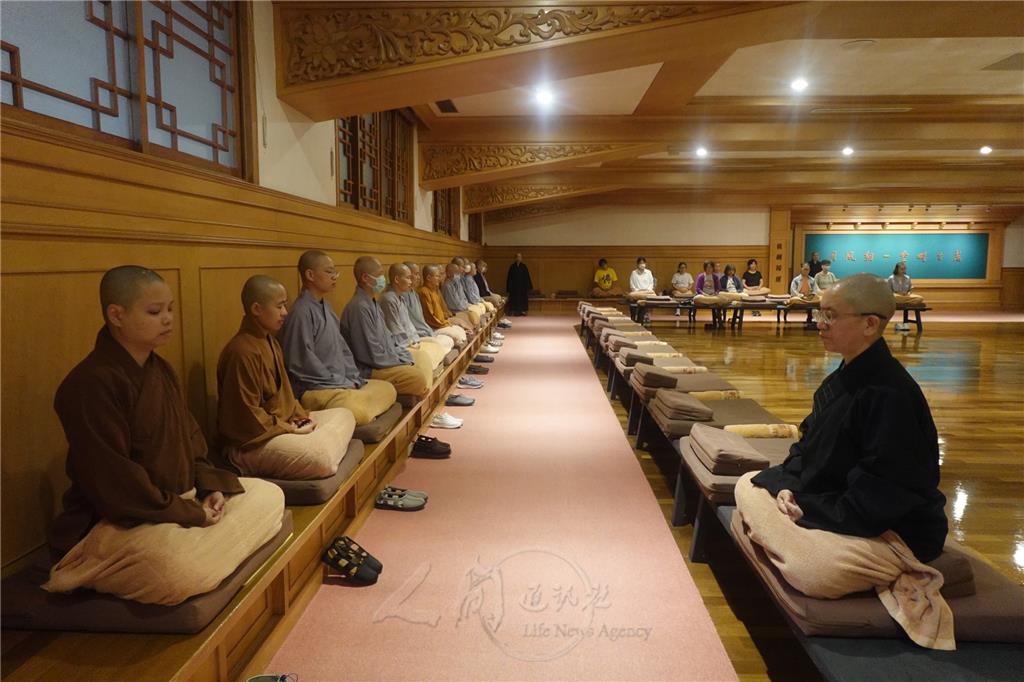
From June 28 to July 3, FGU Buddhist Studies students hailing from Vietnam, India, Bhutan, Myanmar, Malaysia, Japan, Hong Kong, and other regions returned to the Fo Guang Shan headquarters for a spiritual cultivation retreat. Together, they are experiencing the traditional Chinese Buddhist meditation rituals preserved at Fo Guang Shan.
The cultivation program is led by the Women’s Chan Hall and Venerable Hui Qin, a residential mentor from the Department of Buddhist Studies. In addition to the Dharma lecture by Abbot Most Venerable Hsin Bao, the itinerary includes heartfelt exchanges with the Retired Abbot Most Venerable Hsin Pei, and the Chairperson of Fo Guang University, Venerable Tzu Hui.
In his lecture, Most Venerable Hsin Bao noted that Buddhism often emphasizes: "Diligently cultivate precepts, concentration, and wisdom, and extinguish greed, anger, and ignorance." The true purpose of meditation is not merely to temporarily calm the mind, but to eradicate afflictions through the cultivation of concentration (samadhi), ultimately attaining liberation. The "Four Foundations of Mindfulness" taught by the Buddha serves as a crucial meditative method for completely extinguishing afflictions.
Discussing the practice of meditative contemplation, Most Venerable Hsin Bao used AI-generated imagery as a metaphor. He pointed out that meditation is not about creating or imagining pictures, but about observing things as they truly are—mindfully contemplating one's own body, feelings, mind, and mental objects (dharmas), as well as the impermanent and ever-changing nature of all phenomena in the universe, thereby realizing non-self and awakening wisdom.
He further utilized the Twelve Links of Dependent Origination to explain the key to spiritual cultivation, stating that these links are not mere academic terms but the life code for liberation from the cycle of birth and death. If one can avoid generating attachment after experiencing "contact" and "feeling"—thus letting go of "craving" and "clinging"—one can sever the cycle of samsara and advance toward free and unhindered liberation.
Most Venerable Hsin Bao reminded the students that if one only stays at the level of understanding Buddhist doctrine without continuous practical cultivation, it will be difficult to give rise to meditative stability (samadhi-power) when facing life's various challenges, and one might even lose their initial aspiration for the path. Buddhist scriptures contain many accounts of individuals who accumulated blessings and performed good deeds throughout their lives, yet fell into lower realms due to a single attached thought at the moment of death, which underscores the vital importance of daily, diligent cultivation.
The Abbot pointed out that "diligence is temporary, but peace and happiness last for eternal eons," emphasizing that spiritual practice requires perseverance. The precepts established by the Buddha are also skillful means designed to guide practice and counteract afflictions. For example, the lifestyle regulations of "three robes and an alms bowl" teach practitioners to let go of material desires and attachments, thereby weakening the deeply ingrained habits of greed and anger.
In closing, Most Venerable Hsin Bao encouraged the participants to treasure the exceptionally rare and auspicious condition of having "a human body that is difficult to obtain, and the Buddha's Dharma which is difficult to hear." He urged them to seize their time during meditation sessions and studies to truly apply effort to their spiritual practice, ensuring they do not let time slip away, and allowing the Dharma to become a force that anchors their minds and transforms their lives.
The sixty participating students, spanning across freshman, sophomore, and first-year master's levels, also attended a diverse series of lectures to deepen their understanding of meditation theory and practice. These included:
-
"The Practice of Samatha-Vipasyana During the Buddha's Time and Humanistic Living Chan" by Venerable Yong Zhong, Vice Abbess of the Women's Chan Hall;
-
"Venerable Master Hsing Yun’s One-Stroke Calligraphy and His Vagabond Style" by Venerable Jue Ju, Director of the Founder's Quarters;
-
"Meditation and the Brain" by Venerable Man Ju, Vice Director of the Avalokitesvara Bodhisattva Shrine at the Fo Guang Shan Buddha Museum;
-
"The Agama Sutras and Humanistic Living Chan" by Venerable Miao Lin, Director of the International Affairs Department at the Buddha Museum's Administration Center;
-
"The Sutra on the Eight Realizations of the Great Beings" by Venerable Man Yuan of the Fo Guang Shan Public Library;
-
"An Outline of the Essential Samatha-Vipasyana (Xiao Zhi Guan)" by Venerable Zhi Ru, Instructor of Monastic Practice and Deportment at the FGU Department of Buddhist Studies.