
 Facebook
 Instragram
 College and Department of Buddhist Studies, FGU
2026-01-05, Center for Buddhist Studies
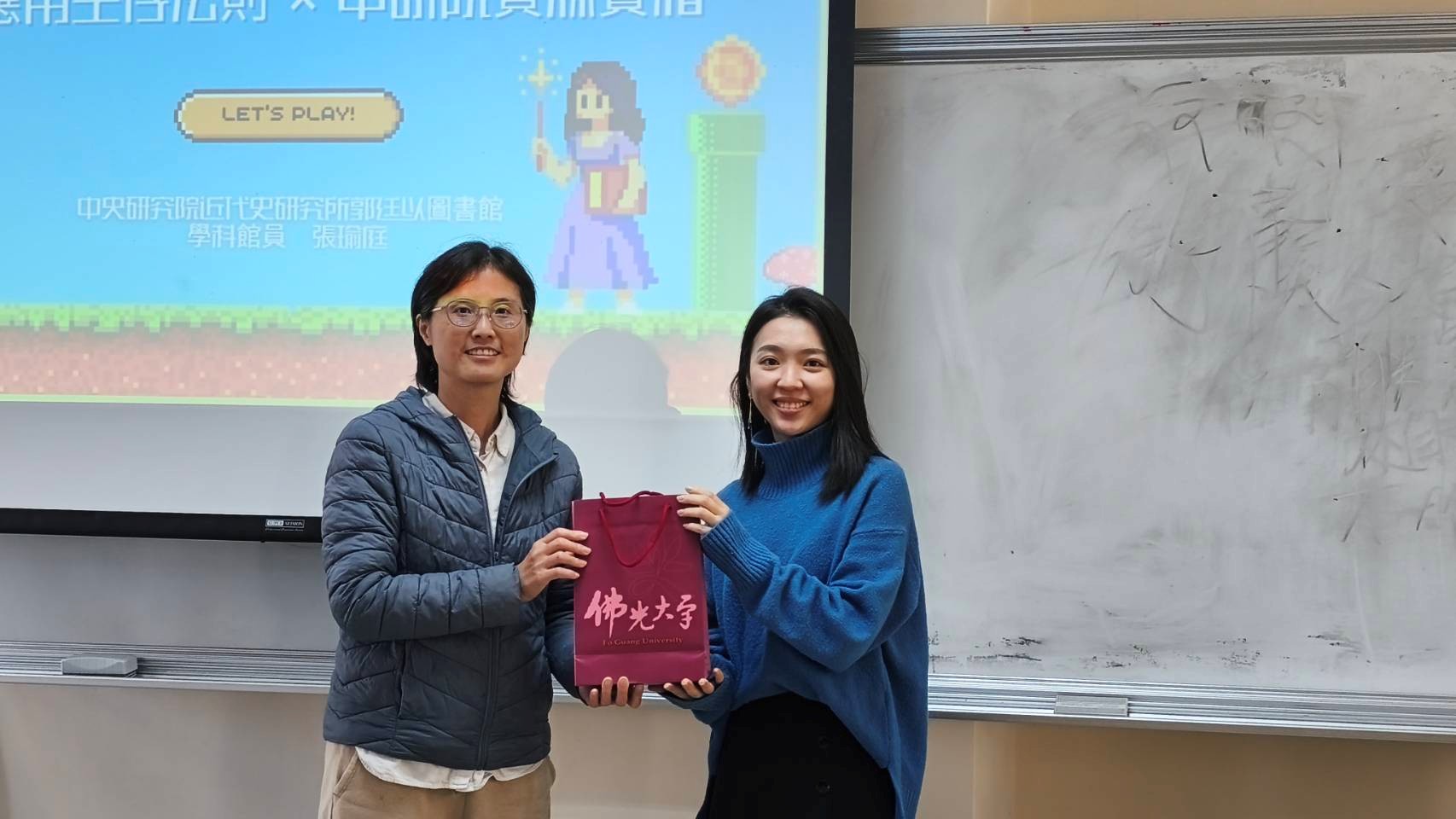
To help students and researchers respond to the academic challenges of the generative AI era, Fo Guang University’s Buddhist Teaching Workshop held a featured lecture on the afternoon of January 5 titled “The Novice Village of Thesis Writing: Survival Rules for Using AI.” The event invited Chang Yu-ting, a librarian at the Kuo Ting-yi Library of the Institute of Modern History, Academia Sinica, as the speaker. She shared practical applications of AI tools in humanities research as well as strategies for identifying potential risks.
Chang emphasized that AI is not a “replacement” for academic research, but rather an auxiliary tool that can support different stages of the research process. Using examples from the humanities, she explained AI’s strengths in idea generation, data organization, foreign-language polishing, and presentation design. At the same time, she cautioned that generative AI is still incapable of conducting in-depth historical source analysis or genuine knowledge production, and that it may generate errors or biases. Researchers therefore must possess strong skills of verification and critical judgment.
During the lecture, Chang guided the audience through real cases to reflect on whether “AI is a great teammate or a liability,” and proposed a research principle of “yellow light—pause, green light—go” to help beginners distinguish between appropriate and inappropriate uses of AI. She also placed special emphasis on academic ethics, explaining the importance of disclosing AI use and providing concrete examples to remind researchers that “it’s not that AI can’t be used, but that one must clearly explain how it is used.”
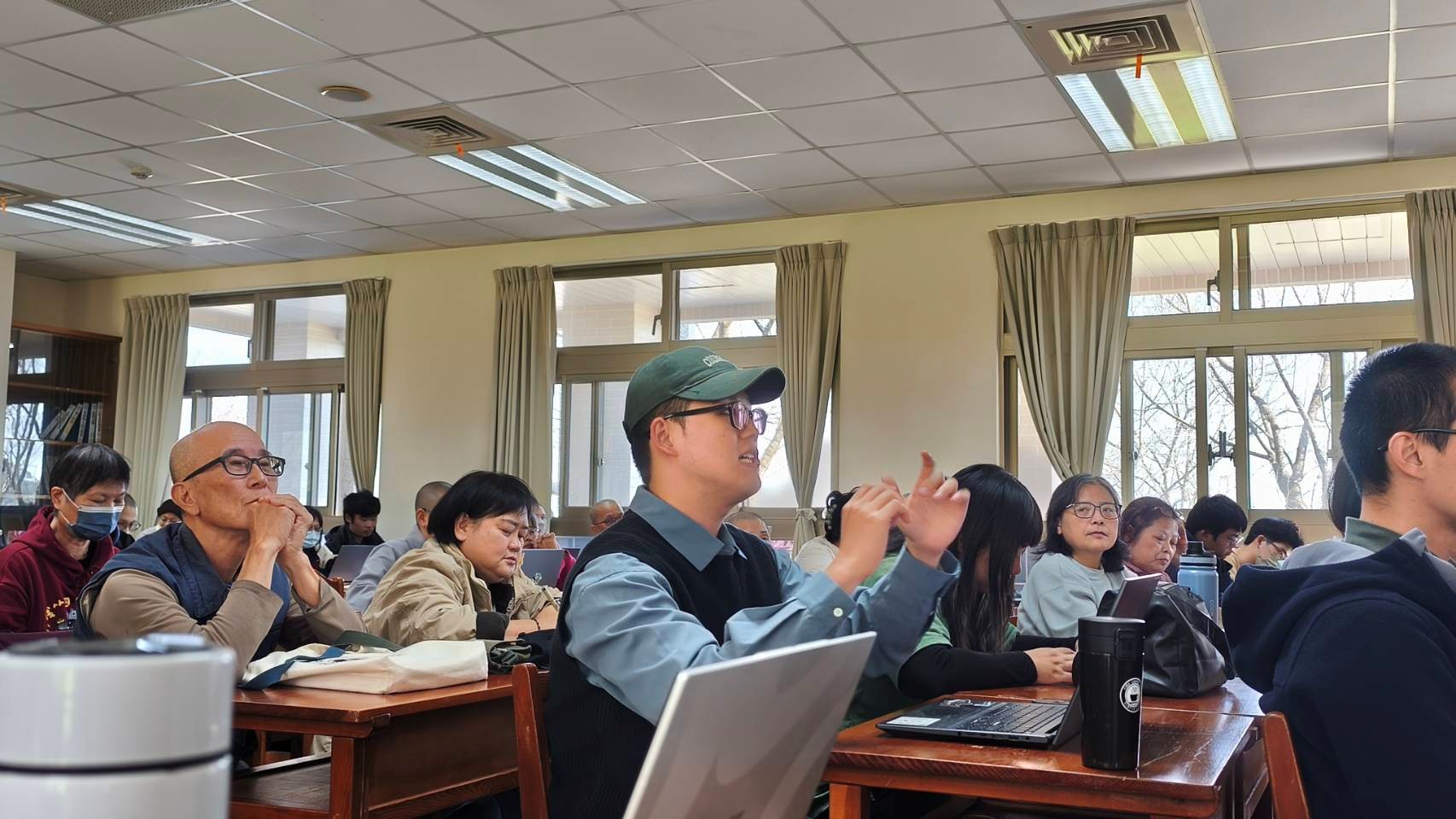
In addition, the lecture introduced the rich collections and digital databases of Academia Sinica’s library, ranging from primary historical sources and secondary scholarship to research reference tools. These resources help students establish a sound starting point for research and avoid overreliance on AI at the expense of fundamental academic training. As the final session in the Buddhist Teaching Workshop series, the event featured lively interaction, and participants gained a clearer understanding of AI applications and research ethics. Through this lecture, the organizers hope to guide students in improving research efficiency amid technological change while safeguarding the depth and responsibility of humanities scholarship.