 FGU
FGU

 College and Department of Buddhist Studies, FGU
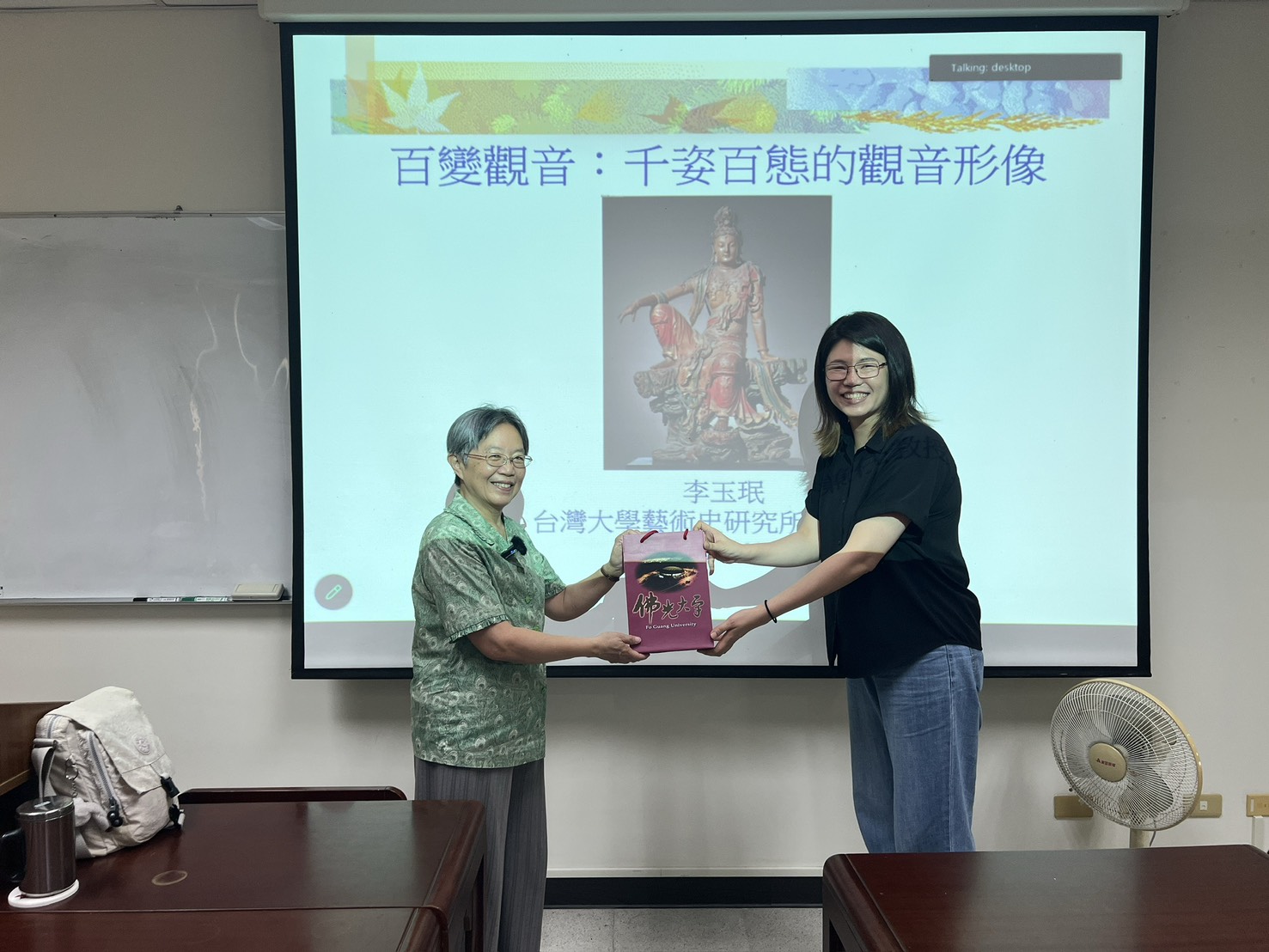
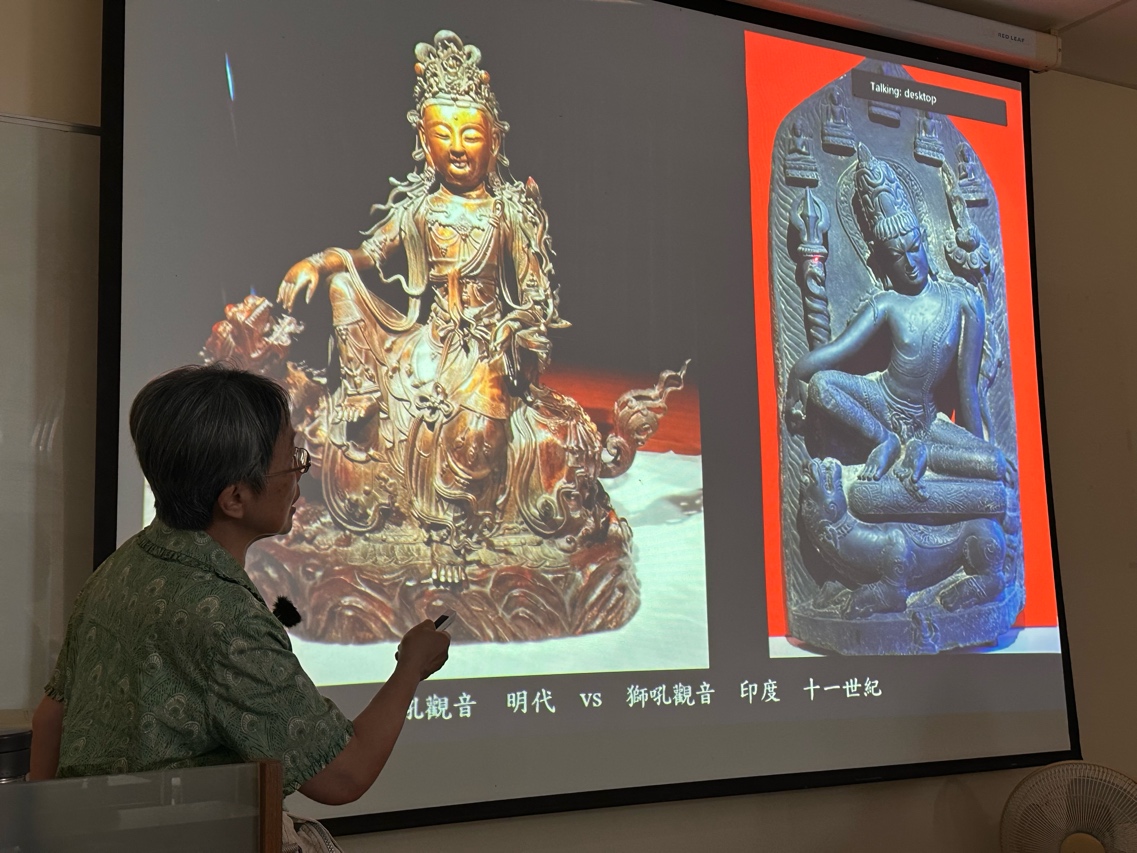
The Department of Buddhist Studies at Fo Guang University held a lecture in its Buddhist Art Lecture Series on June 3, 2026, inviting Professor Lee Yu-min, Adjunct Professor at the Graduate Institute of Art History at National Taiwan University, to deliver a lecture entitled “Transformative Guanyin: The Many Forms and Images of Avalokiteśvara.” Drawing upon the perspective of Buddhist art history, Professor Lee guided faculty members and students in exploring the diverse representations of Avalokiteśvara (Guanyin Bodhisattva) throughout the historical development of Chinese Buddhism.
At the beginning of the lecture, Professor Lee introduced the example of the Willow-Branch Guanyin (Yangliu Guanyin) from the Southern Dynasties period. She explained that the iconography of Guanyin holding a willow branch and a purification vase has no precedent in Indian Buddhist art. Early Indian depictions of Avalokiteśvara were primarily characterized by the lotus and the transformation Buddha crown (huafoguan). The Willow-Branch Guanyin, therefore, should be understood as a distinctly Chinese innovation. This development demonstrates the flourishing of Guanyin devotion in southern China and further suggests that the spread of Guanyin belief often emerged from popular religious practice before extending upward into elite culture. Professor Lee also discussed the image of Child-Giving Guanyin (Songzi Guanyin), noting that the belief that Guanyin could grant sons or daughters led to the emergence of this iconographic form in China, despite its absence in Indian Buddhist traditions. Nevertheless, the image became highly popular within Chinese society.
In discussing the historical development of Guanyin imagery, Professor Lee categorized Avalokiteśvara iconography into several doctrinal and devotional systems, including the Lotus Sutra tradition, the Pure Land tradition, and the Huayan tradition. She introduced, respectively, Guanyin images associated with the Universal Gate Chapter (Pumen pin) of the Lotus Sutra; representations of Avalokiteśvara within the Western Pure Land tradition; and the Water-Moon Guanyin imagery connected with the Huayan tradition. Through these examples, Professor Lee demonstrated how distinct scriptures and devotional traditions contributed to the formation of diverse visual representations of Guanyin. The development of Mount Putuo devotion, Water-Moon Guanyin imagery, and Child-Giving Guanyin all reveal the processes of localization that accompanied the transmission of Buddhism in China. By comparing artistic materials from the Dunhuang caves, the Longmen grottoes, the Dazu rock carvings, and paintings from various dynasties, Professor Lee illustrated how Guanyin iconography continuously transformed in response to changing devotional needs. While lotus-bearing Guanyin and the transformation Buddha crown can already be found in early Indian Buddhist art, the Willow-Branch Guanyin represents an iconographic form that emerged specifically within China.
During the lecture, Professor Lee further engaged students by posing the question: “Why do some images of Thousand-Armed Guanyin possess only forty hands?” Using twelfth-century Avalokiteśvara sculptures from the Dali Kingdom as examples, she explained that each hand symbolically saves twenty-five categories of sentient beings, such that forty hands collectively represent the salvation of all beings throughout the three realms.
Another major theme of the lecture concerned the transformation of Guanyin’s gendered representation. Professor Lee pointed out that early images of Avalokiteśvara generally possessed masculine characteristics, with the transformation Buddha crown and lotus-bearing hand serving as important identifying features. However, from the Song dynasty onward, Guanyin’s facial features gradually became softer and more feminized, and by the Ming and Qing periods Guanyin was widely perceived as female. Literary works such as The Romance of the Western Chamber (Xixiang ji) compared feminine beauty to the Water-Moon Guanyin, reflecting the widespread social acceptance of feminine representations of Avalokiteśvara during that time. Professor Lee emphasized that the transformation of Guanyin from male to female form should not be understood merely as a stylistic change in art, but rather as the result of a long-term interaction between Buddhist belief and Chinese social and cultural contexts.
The lecture concluded with an engaging discussion between Professor Lee and participants, during which she further addressed topics such as Guiding Bodhisattvas, regional differences in Guanyin iconography, and the diverse developments of later Guanyin devotion. Through this lecture, students gained a deeper understanding of the rich variety of artistic representations associated with Avalokiteśvara. Professor Lee also emphasized that the multiplicity of Guanyin forms continues to generate abundant opportunities for scholarly research and encouraged students to continue exploring the field of Buddhist art and devotional studies.