
 Facebook
 Instragram
 College and Department of Buddhist Studies, FGU
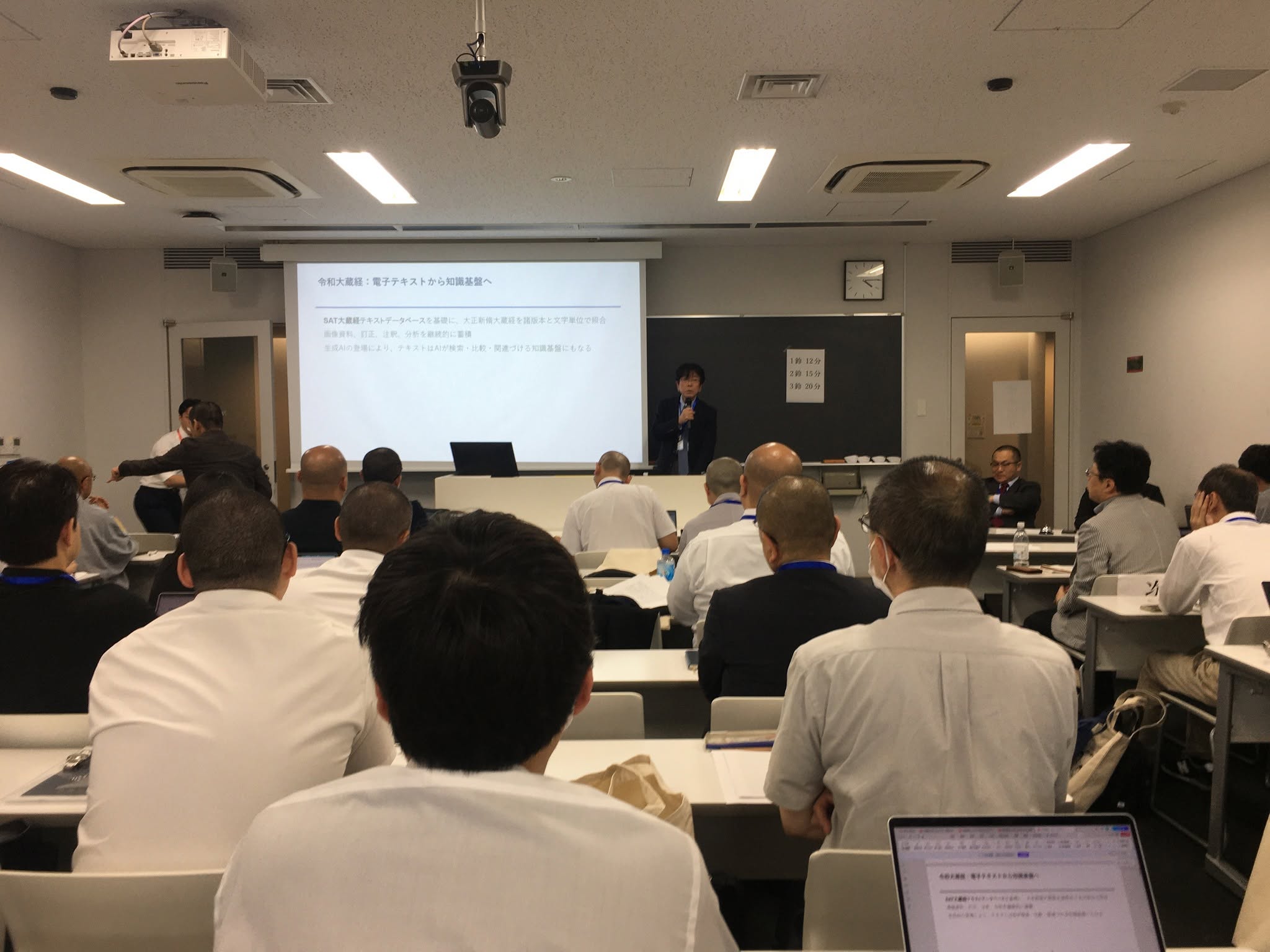
The 77th conference was held primarily in person, with selected sessions offered online. More than 260 scholars presented papers, with parallel sessions taking place in over ten classrooms. From senior scholars to emerging researchers, participants shared their latest findings, reflecting the vitality and diversity of contemporary research in Indian and Buddhist Studies. A major theme of this year’s conference was “The History and Future of the Buddhist Canon: Commemorating the International Registration of the Three Buddhist Canons of Zōjōji, Head Temple of the Jōdo School, in UNESCO’s Memory of the World Register” (大蔵経の歴史と未来―浄土宗大本山増上寺三大蔵・ユネスコ「世界の記憶」国際登録記念―). A special thematic section was organized to explore the history, preservation, transmission, and future development of Buddhist canonical texts.
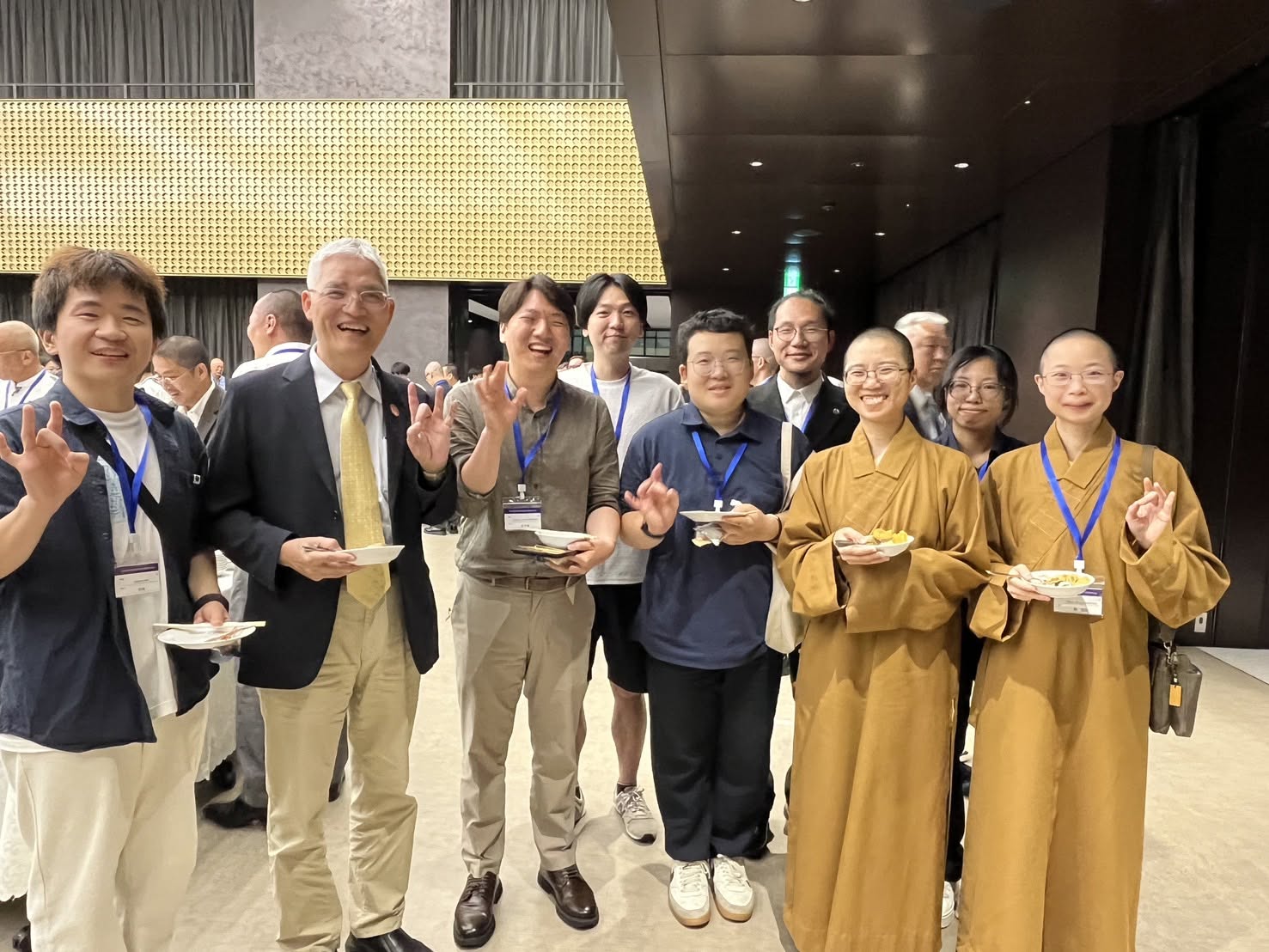
“Through this conference, I had the opportunity to discuss nōzen, a concept that is quite widespread in Chinese-speaking Buddhist circles but relatively unfamiliar in Japanese Buddhism,” Ven. Zhiwen explained. “I also hoped to introduce the Humanistic Buddhist understanding of putting Chan practice into action through everyday life and daily work.”
She further noted that integrating Chan practice with physical labor and everyday monastic duties is not merely a practical way of life; it is closely connected with the traditional methods through which Chan masters trained and educated their disciples. By examining the concept of nōzen, her research seeks to reconsider the relationships among Chan cultivation, labor practices, and contemporary Humanistic Buddhism.
Attending the conference in Japan also gave Ven. Zhiwen an opportunity to observe more directly the development of Buddhist Studies in Japan and within the broader international academic community. She noted that many Japanese universities with histories extending over a century were founded by Buddhist denominations or temples. At the same time, major comprehensive research universities, including the University of Tokyo, have long maintained academic programs and research fields related to Indian philosophy and Buddhist Studies.
The conference brought together not only a large number of young Japanese scholars but also international students and researchers from Taiwan, mainland China, Korea, Europe, and North America who are pursuing research in Buddhist Studies.
“In more than ten classrooms, over two hundred research presentations were taking place, with senior scholars and emerging researchers alike sharing their work on the same academic platform,” Ven. Zhiwen observed. “Participating in such a large-scale academic conference in person gave me an even stronger appreciation of the professionalism and intellectual vitality of Buddhist Studies within the international academic community.”
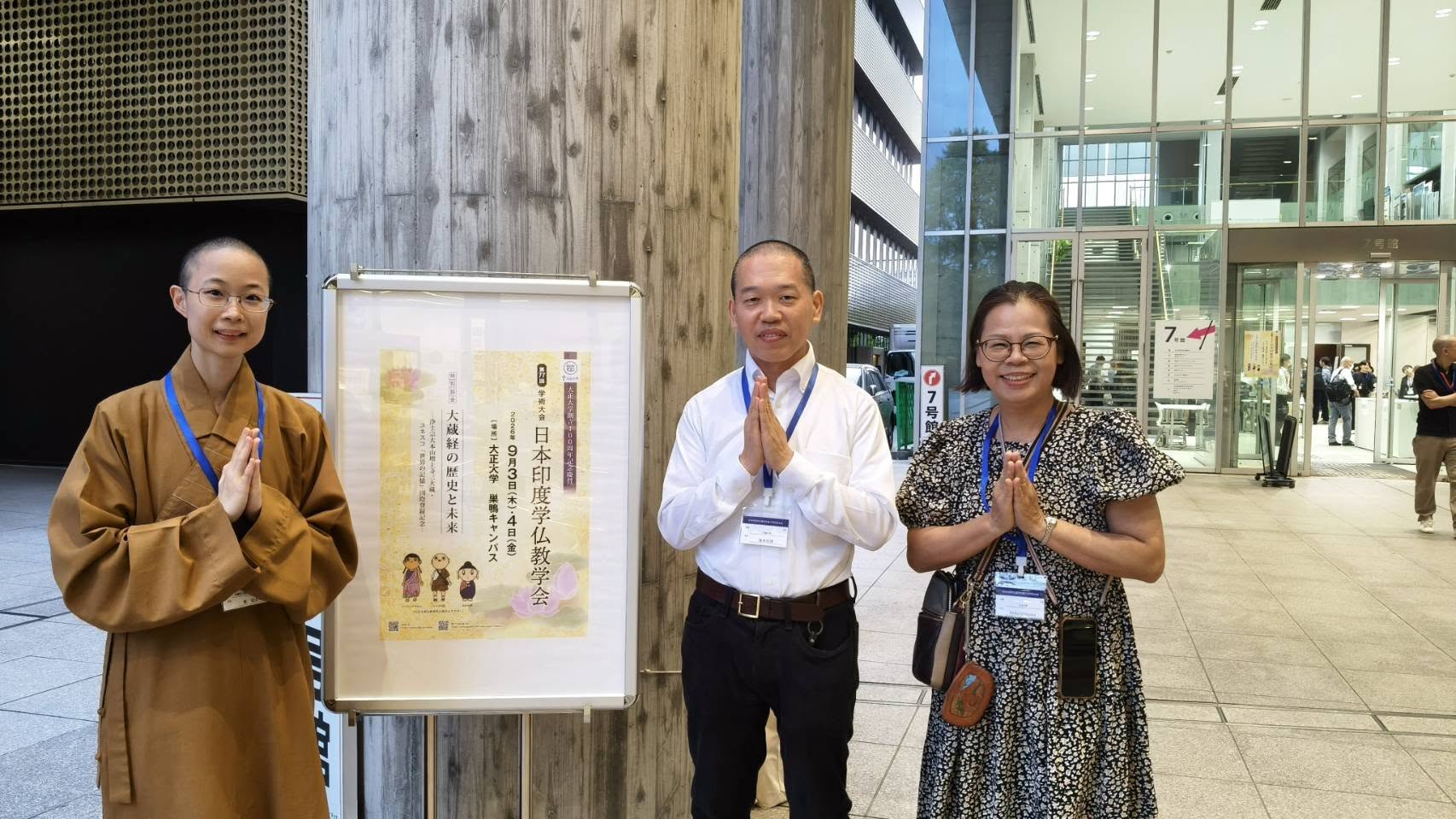
Participating in this international academic conference also deepened Ven. Zhiwen’s appreciation of the founding of the Department of Buddhist Studies at Fo Guang University.
“Seeing so many young scholars from Japan and other countries devoting themselves to Buddhist Studies made me appreciate even more deeply the vision and foresight of Venerable Master Hsing Yun, the founder of Fo Guang University, in establishing the Department of Buddhist Studies,” she said.
The Department of Buddhist Studies at Fo Guang University has long been committed to Buddhist scholarship and the cultivation of professional researchers. It encourages graduate students to participate in major academic conferences in Taiwan and abroad, enabling them to broaden their scholarly perspectives and deepen their professional training through paper presentations, academic discussions, and international exchanges. Graduate students’ participation in international scholarly communities not only showcases their individual research achievements but also helps strengthen academic connections between Fo Guang University and the global community of Buddhist Studies.
Ven. Zhiwen also expressed her particular gratitude to the Fo Guang Shan Institute of Humanistic Buddhism for its sponsorship and support of her participation in the conference. This assistance enabled her to present her research in an international academic setting and to engage with scholars representing different Buddhist cultures and research traditions.
Ven. Zhiwen’s participation in the 77th Annual Conference of the Japanese Association of Indian and Buddhist Studies demonstrates the active engagement of doctoral students from Fo Guang University’s Department of Buddhist Studies in contemporary Buddhist scholarship. Through her research on nōzen, she also brought perspectives from Chinese-language Buddhism and Humanistic Buddhism into international academic dialogue, further expanding the possibilities for cross-cultural exchange in Buddhist Studies.