

 Facebook
 Instragram
 College and Department of Buddhist Studies, FGU






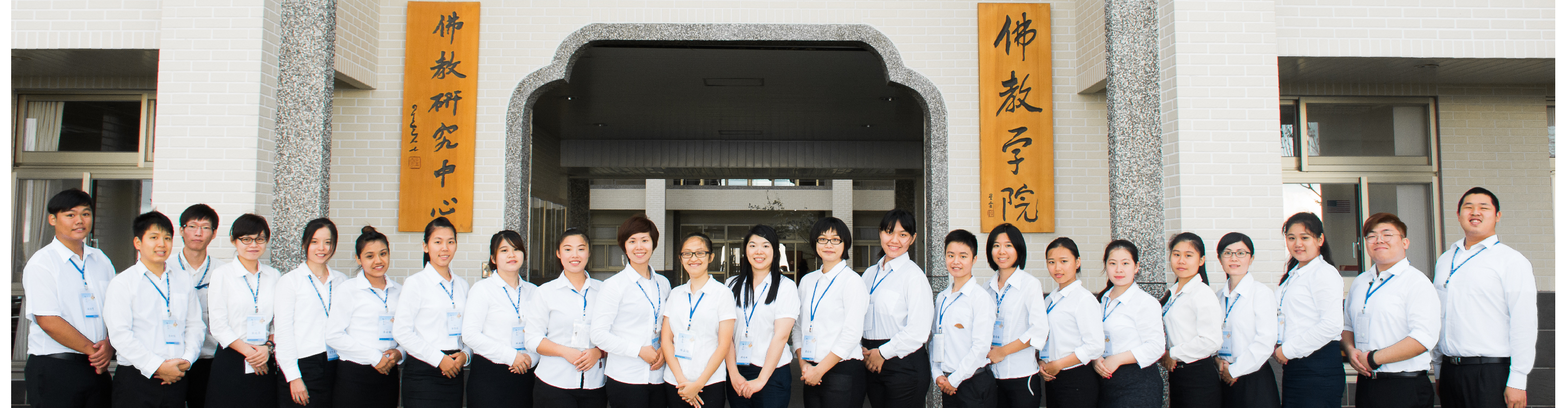


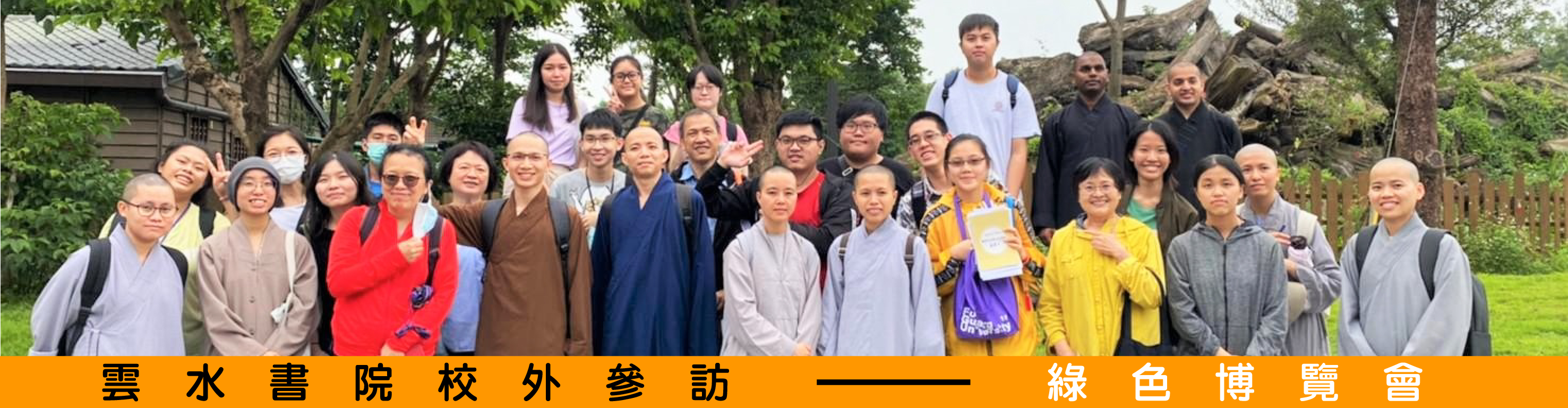

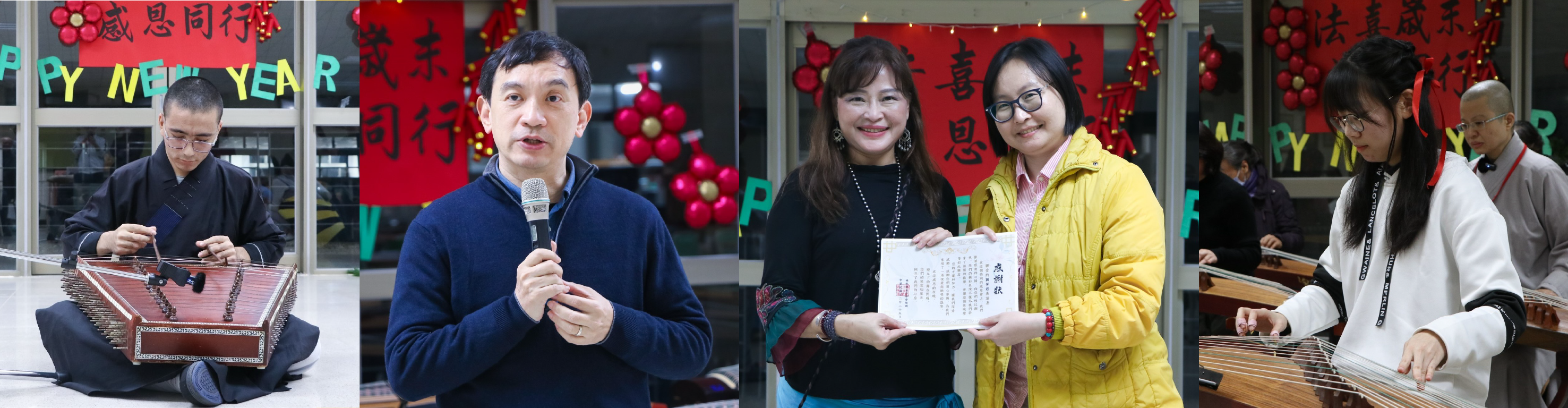
The graduation exhibition of the Class of 2022 of the Department of Buddhist Studies at Fo Guang University, entitled Embarking: Transformative Currents (Qicheng · Zhuanhe), officially opened on May 6 at Yunwu Building 5 and remained on display until May 13. The opening ceremony was attended by University President Chao Han-chieh, Vice President Ma Yuan-jung, Dean of the College of Buddhist Studies Hsia Yun-chung, together with faculty members from the Department of Buddhist Studies, who participated in the ribbon-cutting ceremony and witnessed the culmination of the students’ four-year academic journey.
During the opening ceremony, students explained that the concept of “Embarking” signifies not merely a beginning, but also a continual process of self-discovery through repeated challenges and transformations in perspective. “Transformative Currents,” meanwhile, symbolizes the ongoing flow and transformation of life, much like the movement of a river. The exhibition sought to extend Buddhist studies beyond classical textual theory into diverse forms of contemporary creative expression, thereby demonstrating interdisciplinary connections between Buddhism and modern society, technology, art, and psychological inquiry.
After touring the exhibition prior to the opening ceremony, President Chao remarked that many of the projects creatively integrated contemporary technology and artificial intelligence, leaving a particularly strong impression. Among the exhibited works were interactive animations inspired by Buddhist scriptures, musical compositions based on Buddhist literary themes, and AI-assisted reinterpretations of classical Buddhist literature. These projects highlighted the students’ ability to creatively synthesize Buddhist thought with emerging technologies.
The exhibition featured thirteen projects spanning a wide range of fields, including academic research, religious culture, mental health, artificial intelligence, board game design, musical composition, digital interaction, and incense aesthetics. Representative works included From Scripture to Digital Media: AI Reproduction and Religious Representation of Maitreya Pure Land Imagery, which reinterpreted Buddhist visual culture through generative AI; The Journey for Scriptures, a board game integrating Buddhist teachings with game mechanics; and Clouds, Water, and Incense Awareness: Olfactory Cultivation in Buddhist Aesthetics, which employed incense art as a medium for contemplative practice and self-reflection. These projects collectively demonstrated innovative attempts to translate Buddhist ideas into contemporary cultural forms.
In addition, several students addressed pressing contemporary social issues by examining the relationships between religion, mental health, attachment styles, and emotional coping mechanisms. Other projects focused on Taiwanese local religious practices, temple culture, and monastic institutional systems, reflecting the Department of Buddhist Studies’ distinctive combination of academic rigor and social engagement.
The Department of Buddhist Studies expressed the hope that the exhibition would allow a broader audience to recognize that Buddhism is not confined to scriptures and temples alone, but is also capable of responding to the existential concerns and social challenges of contemporary life. Each project, the department noted, represents both a point of departure within the students’ educational journey and a unique “transformative current” of personal growth.
The graduation exhibition Embarking: Transformative Currents was held from May 6 to May 13 at Yunwu Building 5, and warmly invited faculty members, students, and members of the public to participate in this exhibitionary journey that integrated Buddhist studies, artistic creativity, and reflections on human life.


